
 fish | mollusks | arthropods | cnidarian | marine mammals | mythical creatures
 Fish
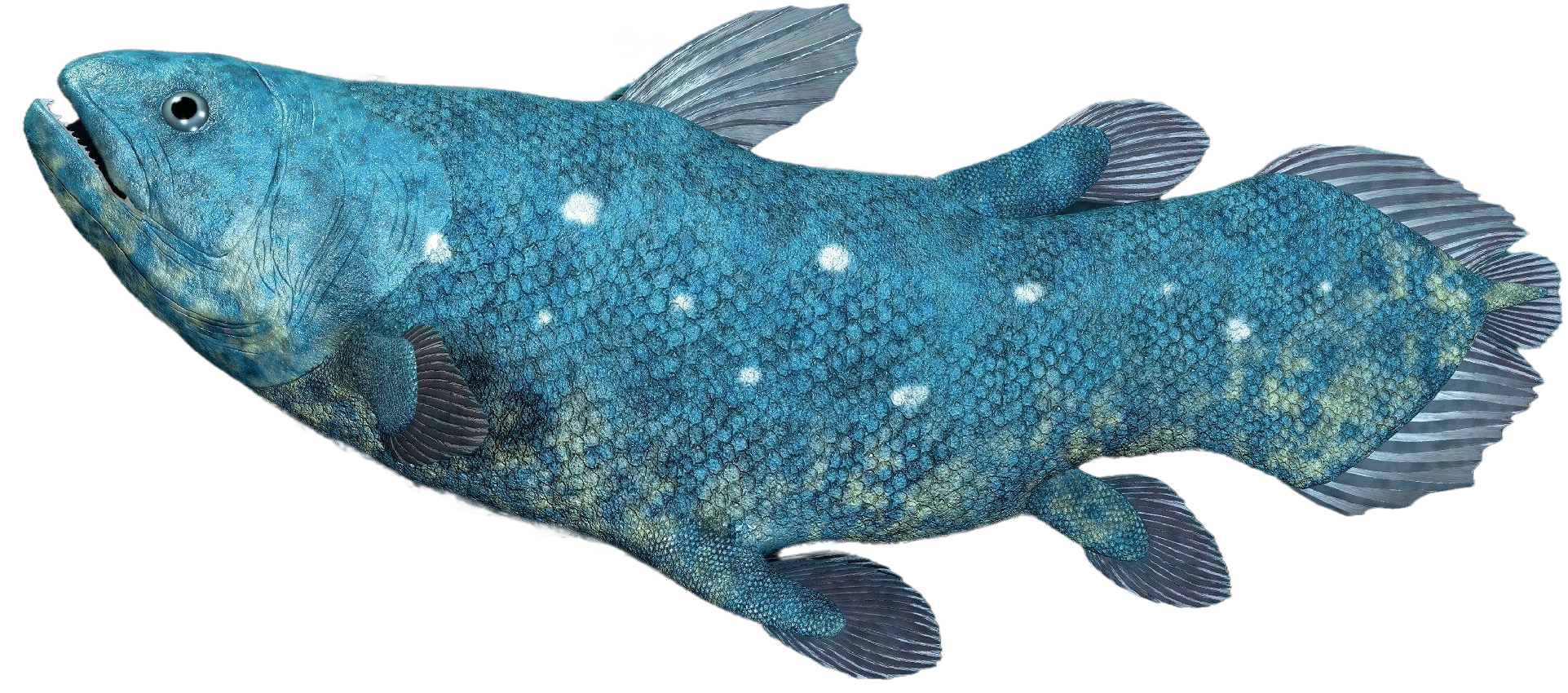
Coelacanth
A literal fossil fish. Thought extinct for 66 million years until one casually showed up in 1938. Its fins move like proto-limbs, as if it’s rehearsing becoming land again.
etymology:Cœlacanthus ('hollow spine'), from the Ancient Greek κοῖλ-ος (koilos, 'hollow') and ἄκανθ-α (akantha, 'spine')
identification: The coelacanth has a thick, lobed body covered in cosmoid, bluish-green scales, with fleshy, limb-like fins that move in a unique, alternating pattern. It has a large, bony head, a wide, slightly upturned mouth, and a distinctive three-lobed tail, giving it a prehistoric, almost “living fossil” appearance.
location: The coelacanth is found in deep marine waters in two main regions:
- West Indian Ocean: off the coasts of Comoros, Madagascar, and South Africa.
- Indonesian waters: near Sulawesi.
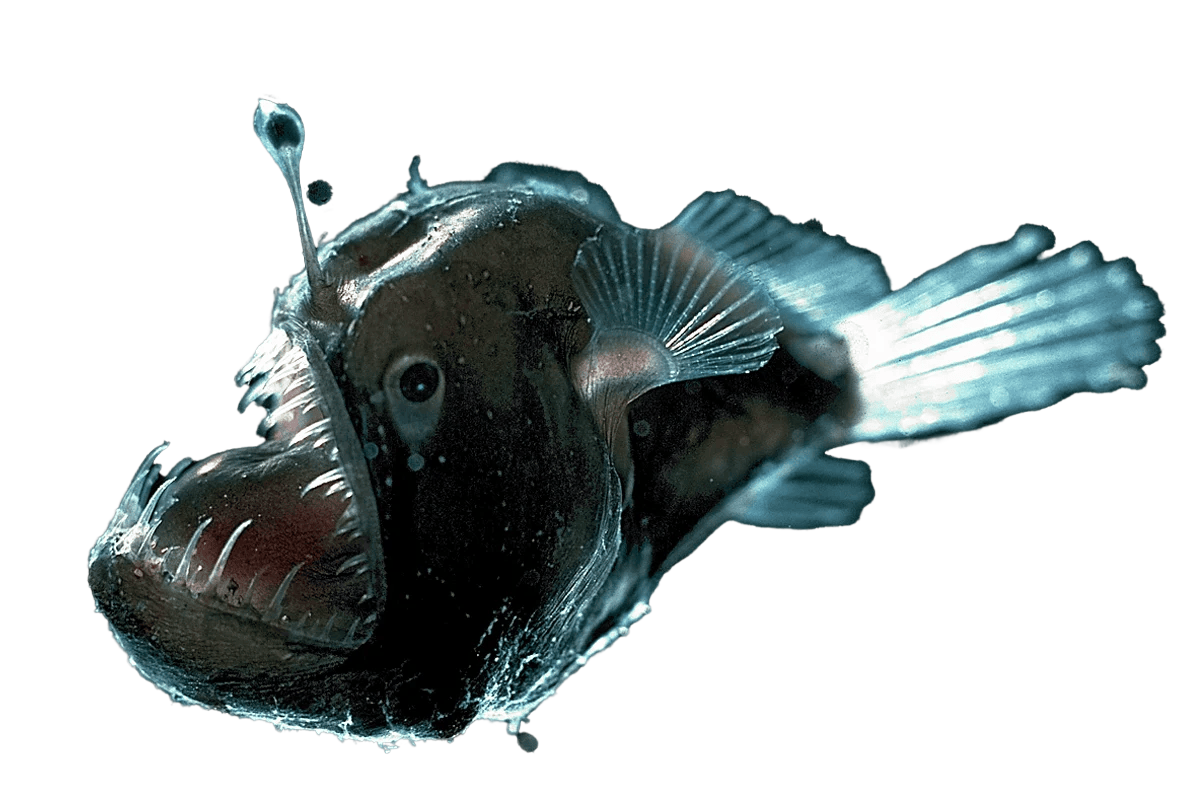
Deep Sea Anglerfish (Ceratioidei)
The classic. A glowing lure grown from its own body. The females are giants; the males are basically biological USB drives.
etymology:Ceratioidei takes its name from the genus Ceratias, the type genus of the family Ceratiidae and of the suborder. Ceratias means "horn bearer", an allusion to the esca sticking up from the snout being likened to a horn.
identification: The deep-sea anglerfish has a bulbous, soft body with dark, scale-less skin, a huge mouth filled with long, sharp teeth, and a bioluminescent lure (illicium and esca) on its head used to attract prey. Its small eyes and weak fins suit the deep, dark, high-pressure environment, and females are vastly larger than tiny, parasitic males.
location: Found worldwide in all major oceans, including tropical, temperate, and polar regions. They inhabit the bathypelagic and mesopelagic zones, typically at depths between 150 - 4,400 meters.
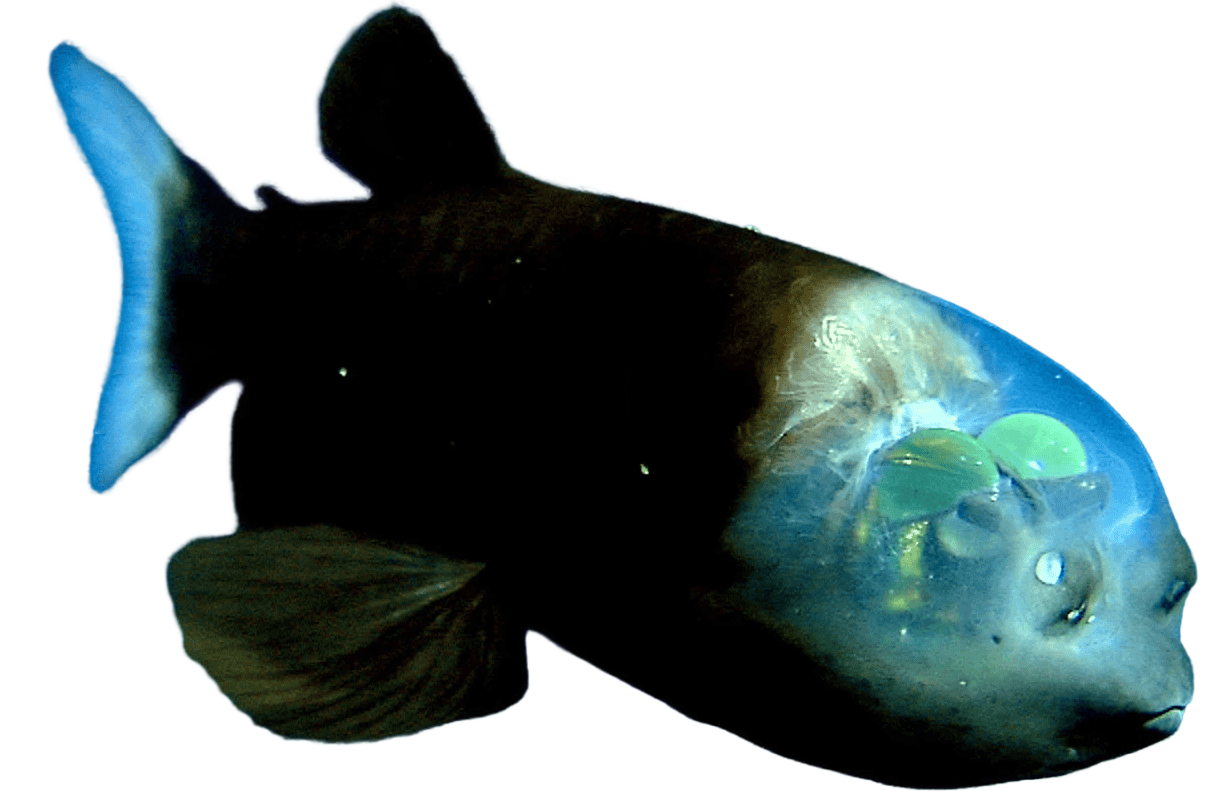
Barreleye Fish
Transparent head. Eyes that rotate inside its skull. Looks fake even when you know it’s real.
etymology: The term Barreleye encompasses all fish under the Opisthoproctidae umbrella. The name actually originates from the Greek words for ‘behind’ and ‘anus’ which begins to portray its strangeness.
identification:The barreleye fish has a small, slender body with a transparent, dome-shaped head. Beneath the dome are its green, tubular eyes that can rotate independently to look upward or forward. It has a small, upturned mouth, delicate fins, and a pale, almost translucent body, perfectly adapted to the dim, deep-sea environment.
location: found in the deep waters of the North Pacific Ocean, particularly off the coasts of California, Oregon, and Baja California. They typically inhabit the mesopelagic zone, at depths of around 600–800 meters (2,000–2,600 feet), where sunlight is minimal and the water is cold and dark.
Goblin Shark (Mitsukurina owstoni)
Pink, flabby, and its jaw launches forward like a nightmare jack-in-the-box. A living jumpscare.
etymology: This family of sharks is named in honour of Kakichi Mitsukuri who brought the holotype of the family's type species to David Starr Jordan to be scientifically described.[4]
identification: The goblin shark has a slender, pinkish-gray body, an elongated, flattened snout, and a protrusible jaw filled with sharp, nail-like teeth. Its small fins and flabby body make it slow-moving, and its unusual, almost alien appearance is adapted for deep-sea hunting.
location: Found in continental slopes and oceanic trenches worldwide, typically at depths of 100–1,200 meters (330–3,900 feet), though they’ve been seen as deep as 1,300 meters (4,300 feet). They are most commonly reported off the coasts of Japan, the Atlantic Ocean, and New Zealand, but their range is patchy and global, since they live in remote, deep waters.
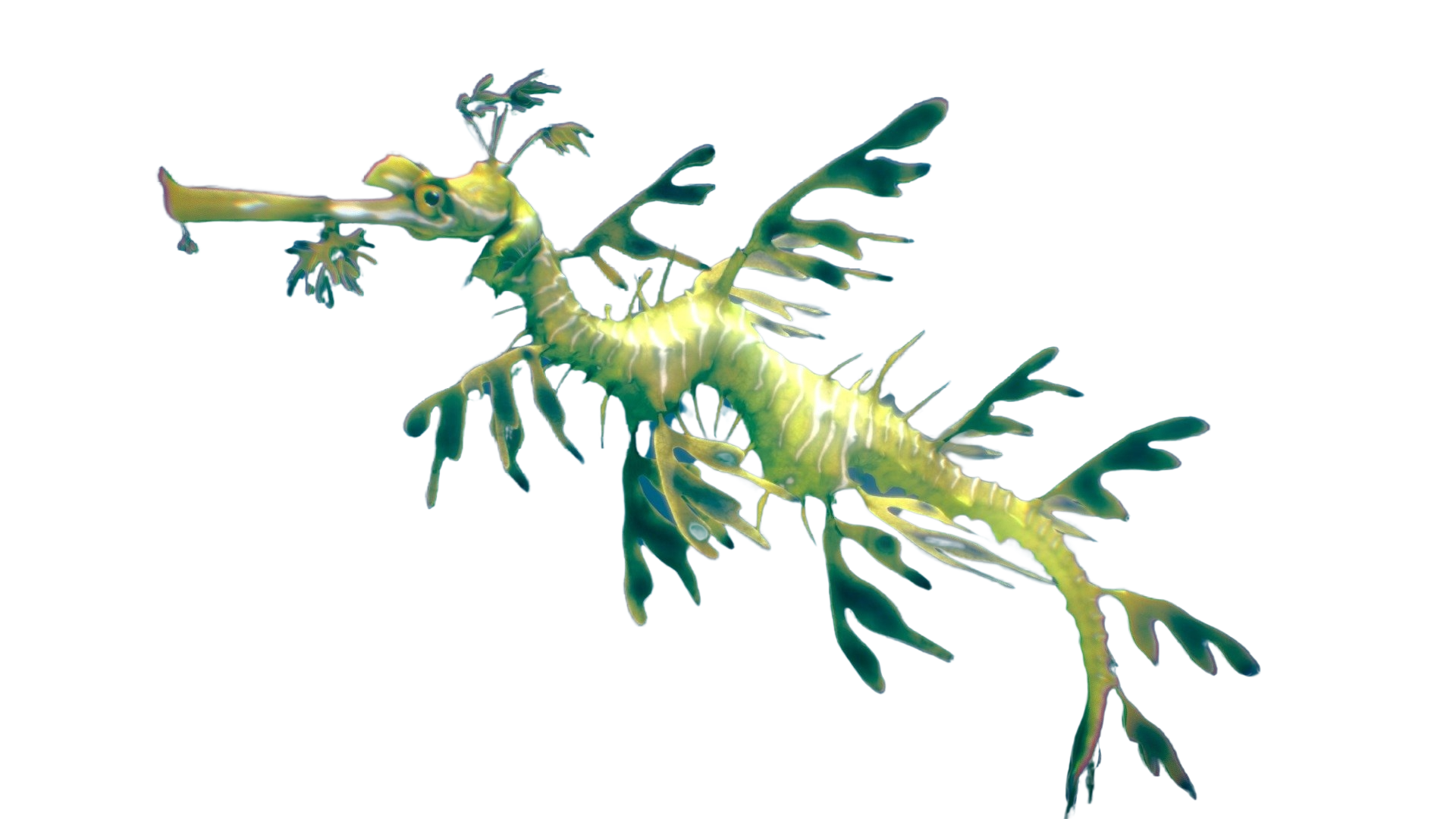
Leafy Sea Dragon (Phycodurus eques)
Looks like drifting seaweed. Moves like a poem. The males carry the eggs.
etymology: The generic name is derived from the Ancient Greek words φῦκος (phûkos) "seaweed"[5], and δέρμα (dérma] "skin".
identification: The leafy sea dragon has a slender, elongated body covered in leaf-like appendages that camouflage it among seaweed and kelp. It has a long, tubular snout for sucking up tiny prey, small transparent fins, and a delicate, golden-brown to greenish coloration that enhances its disguise.
location: The leafy sea dragon is native to the southern and western coasts of Australia, typically found in shallow coastal waters, seagrass beds, and kelp forests at depths of 3–50 meters (10–165 feet). They stay close to the seafloor, blending perfectly with seaweed and kelp.
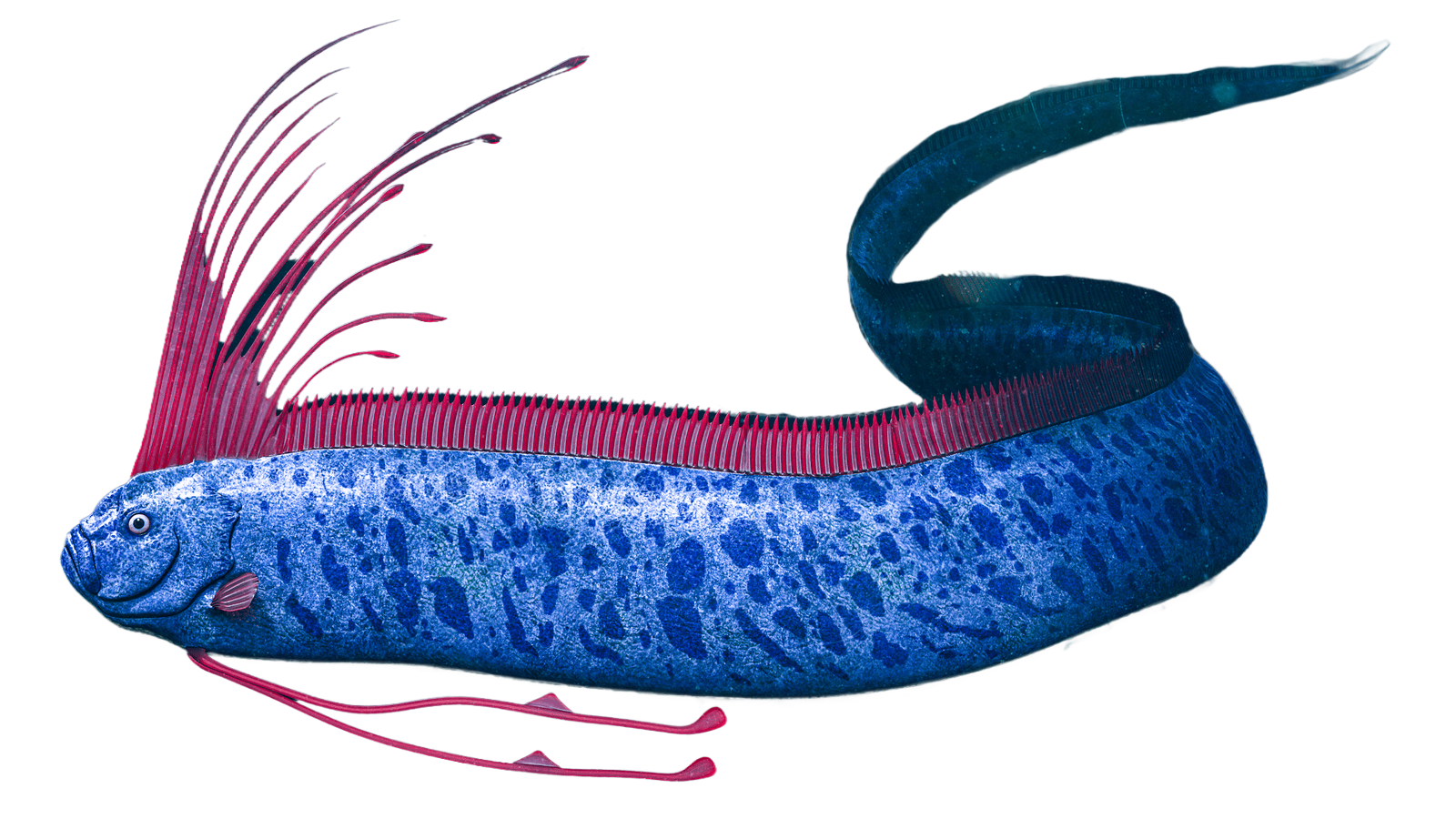
Oarfish (Regalecidae)
The original sea serpent. Silver, ribbon-long, crowned with a red crest like a warning flame. Rarely seen alive. When they surface, people swear earthquakes follow. Ancient sailors didn’t invent leviathans out of nowhere. this is what they glimpsed.
etymology: The common name oarfish is thought to allude either to their highly compressed and elongated bodies or to the now discredited belief that the fish "row" themselves through the water with their pelvic fins. The family name Regalecidae is derived from the Latin regalis, meaning "royal".
identification: The oarfish has an elongated, ribbon-like body that can reach up to 11 meters (36 feet), a silvery sheen with a red dorsal fin running the length of its body, and a small head with large eyes and a protruding, toothless mouth. Its undulating body and long, trailing fins give it a serpentine, almost mythical appearance.
location:The oarfish is found in deep ocean waters worldwide, usually at depths of 200–1,000 meters (650–3,300 feet). They are most often seen in tropical and temperate seas, occasionally washing up near coastlines after storms or when sick, which is why sightings near the surface are rare.
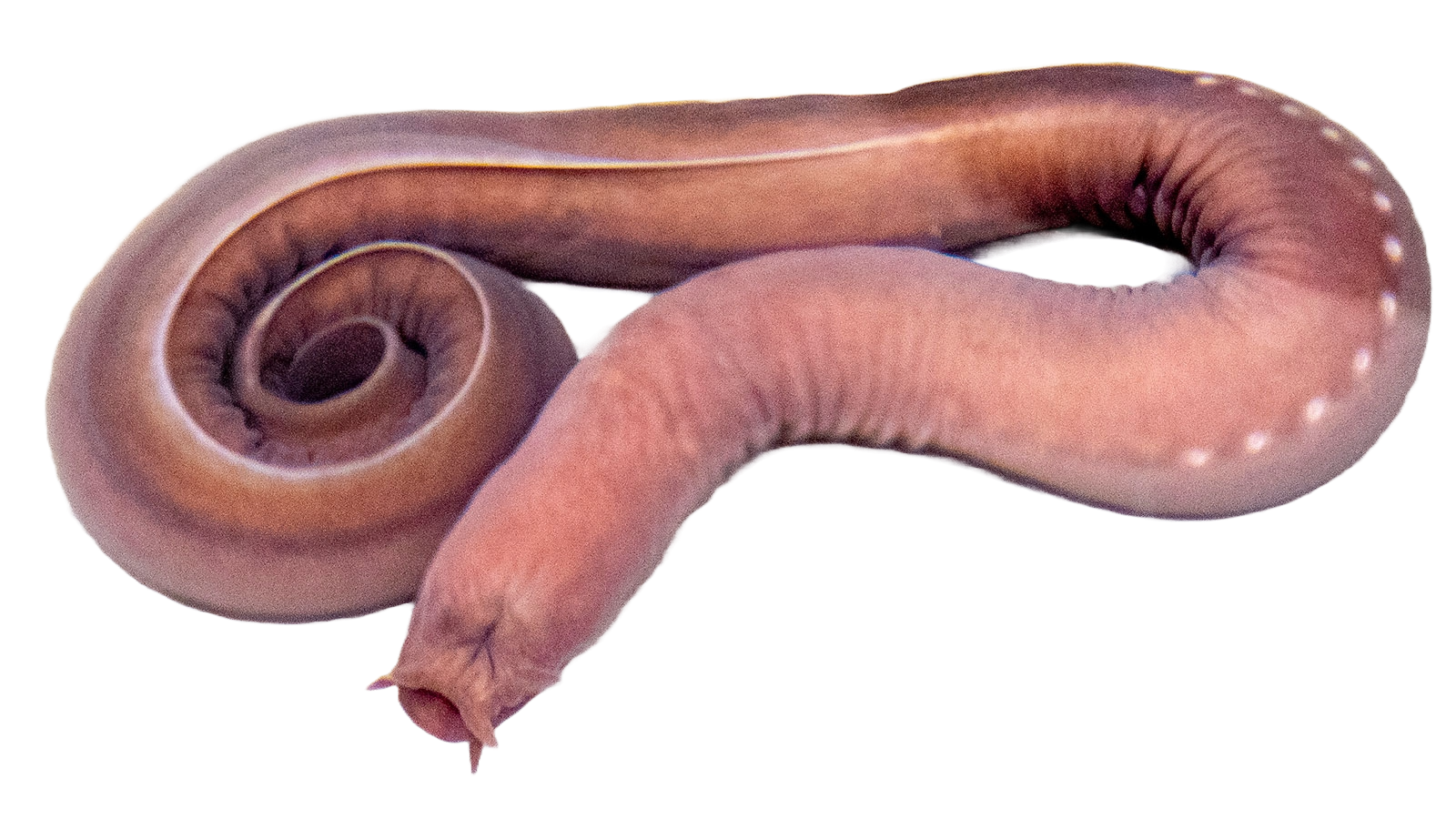
 Hagfish
Produces obscene amounts of slime when threatened, enough to clog a predator’s gills. Ancient people would’ve called this witchcraft. It unravels itself to escape. Death refuses to keep it.
etymology: ...
identification: The hagfish has a slender, eel-like body with smooth, scaleless, slimy skin, a jawless, circular mouth with rasping teeth, and barbels around the mouth for sensing food. Its simple eyes and lack of paired fins reflect its adaptation to a deep-sea, scavenging lifestyle.
location: Hagfish are found in deep, cold waters worldwide, mostly along continental slopes and ocean bottoms at depths of about 80–1,200 meters (260–3,900 feet). They often inhabit muddy or sandy seafloors, where they burrow and scavenge on dead or dying animals.
Lamprey
Jawless, circular mouth full of teeth. Parasite of legends. Could easily be the inspiration for “soul-drinking” creatures in folklore.
etymology: ...
identification: The lamprey has a long, eel-like body with smooth, scaleless skin, a round, sucker-like mouth filled with concentric rows of sharp, rasping teeth, and gill slits along the sides of its head. Its simple fins and flexible body make it well-suited for attaching to and feeding on other fish.
location: Lampreys are found in freshwater and coastal regions worldwide, including rivers, lakes, and nearshore oceans. Some species are anadromous, meaning they migrate from the ocean into rivers to spawn, while others spend their entire lives in freshwater. They are common in North America, Europe, and parts of Asia.
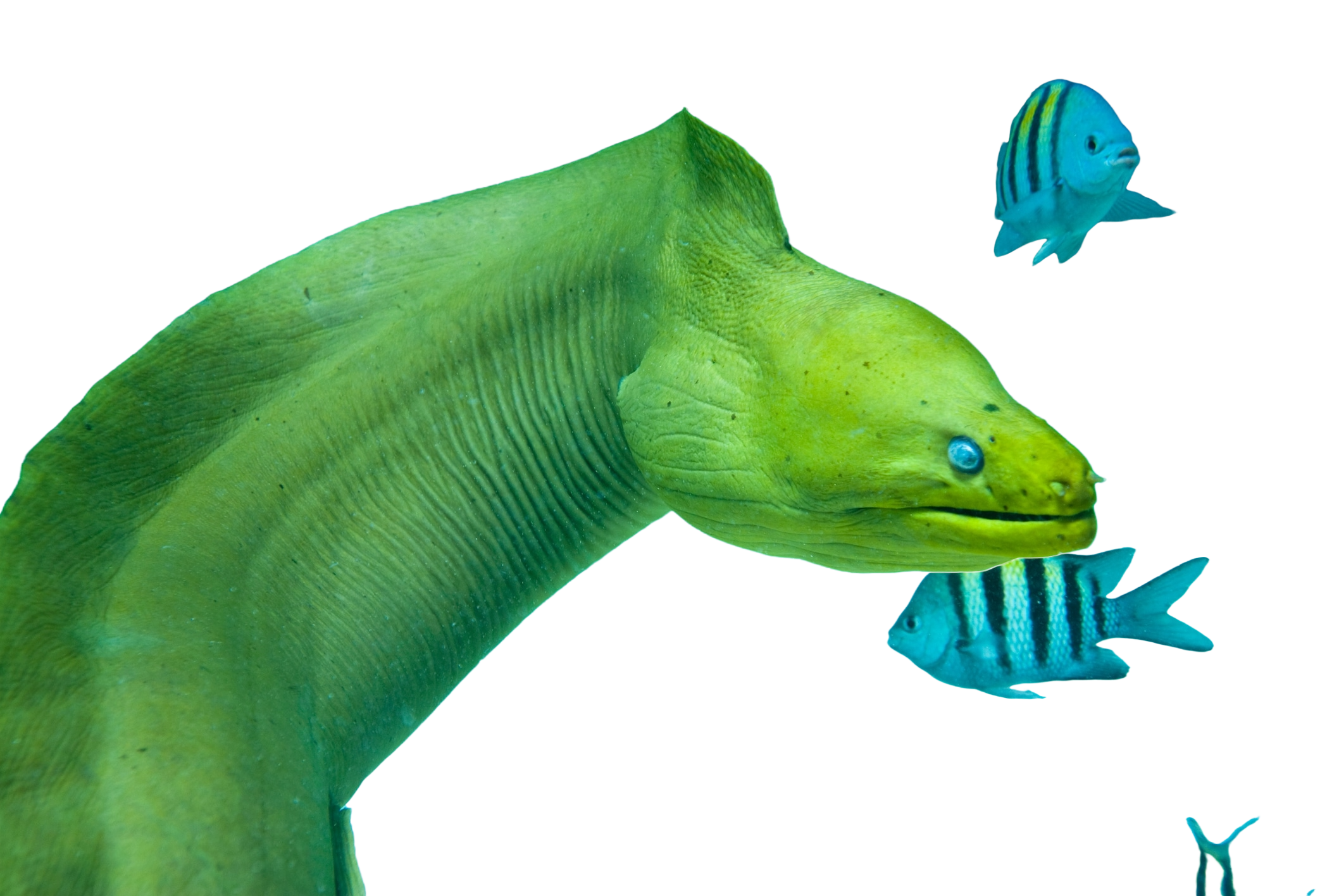
Moray Eel
Temple guardian energy. Lurks in stone, bares ritualistic jaws, moves like a curse unfolding. Romans kept them as living execution tools. That alone tells you everything.
etymology: ...
identification: The moray eel has a long, muscular, snake-like body covered in smooth, scaleless skin that ranges from brown to green or patterned. It has a wide, tooth-filled mouth, small eyes, and dorsal fins that run along much of its back, making it an agile ambush predator in rocky crevices.
location: Moray eels are found in tropical and subtropical oceans worldwide, most commonly in coral reefs, rocky crevices, and shallow coastal waters. They prefer warm, sheltered environments where they can hide and ambush prey.
Mollusks
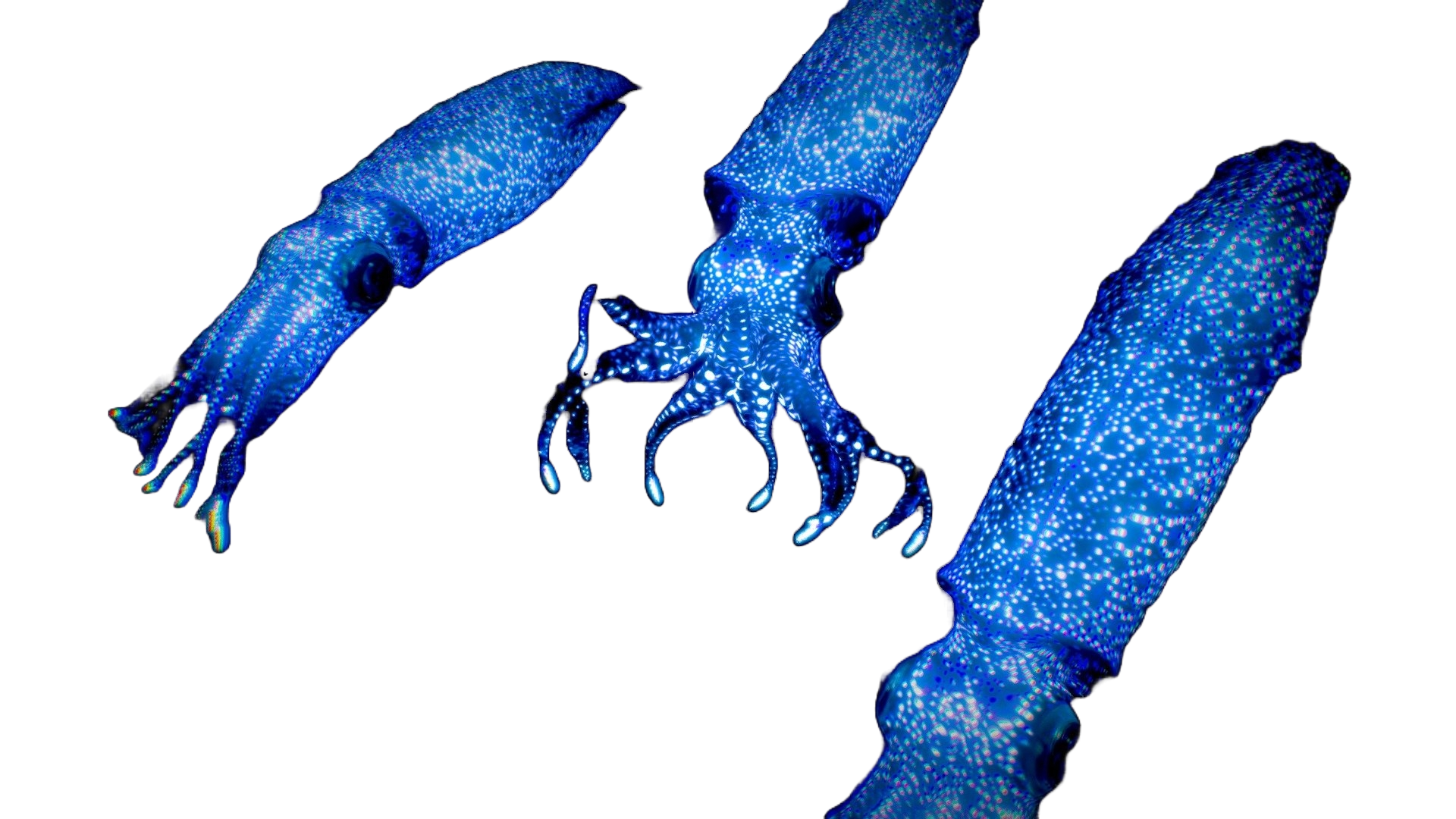
Firefly Squid
Tiny squid covered in thousands of light organs. When they gather, the sea looks like a submerged starfield.
etymology: (Watasenia scintillans)
identification: The firefly squid has a small, torpedo-shaped body about 7–8 cm long, with translucent skin and bioluminescent organs along its arms and body that glow blue, green, or red. It has large eyes adapted for low light and short, flexible arms lined with tiny suckers for catching prey.
location: The firefly squid is found in deep waters off Japan, primarily in the western Pacific Ocean. They spend most of the year in the mesopelagic zone (200–400 meters deep) and migrate to shallow coastal waters in spring to spawn, creating spectacular glowing displays.
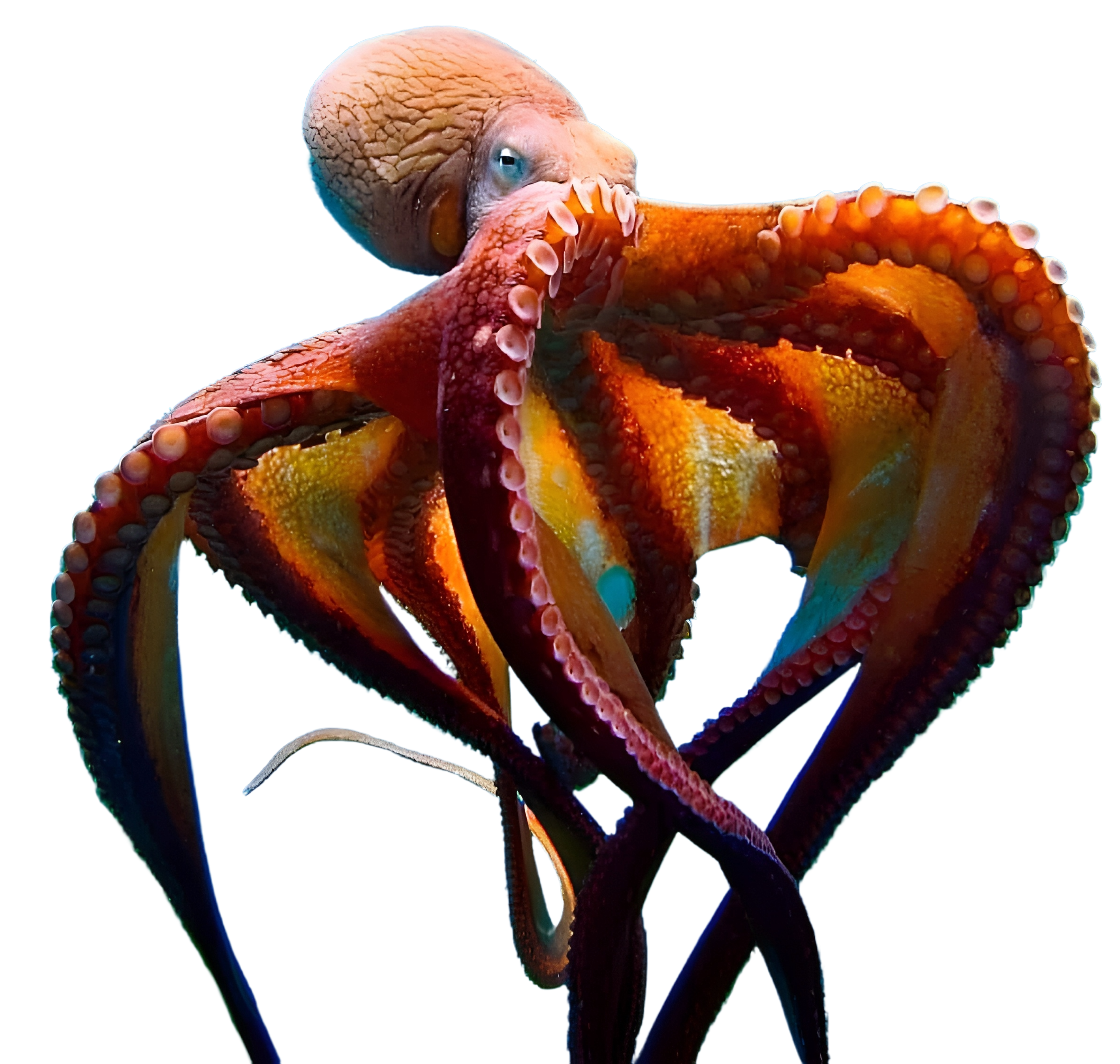 Giant Pacific Octopus
Solves puzzles, escapes tanks, recognizes individual humans, and has neurons in its arms. You’re not watching it—you’re being evaluated
etymology: ...
identification: The Giant Pacific Octopus has a large, bulbous body with eight long, flexible arms lined with suction cups, and soft, reddish-brown to mottled skin that can change color and texture. It has prominent eyes and no internal skeleton, allowing it to squeeze into tight spaces.
location: The Giant Pacific Octopus is found in the North Pacific Ocean, from Japan and Russia to Alaska and the Pacific Northwest of the United States. It typically inhabits coastal waters, rocky reefs, and kelp forests at depths of up to 300 meters (1,000 feet).
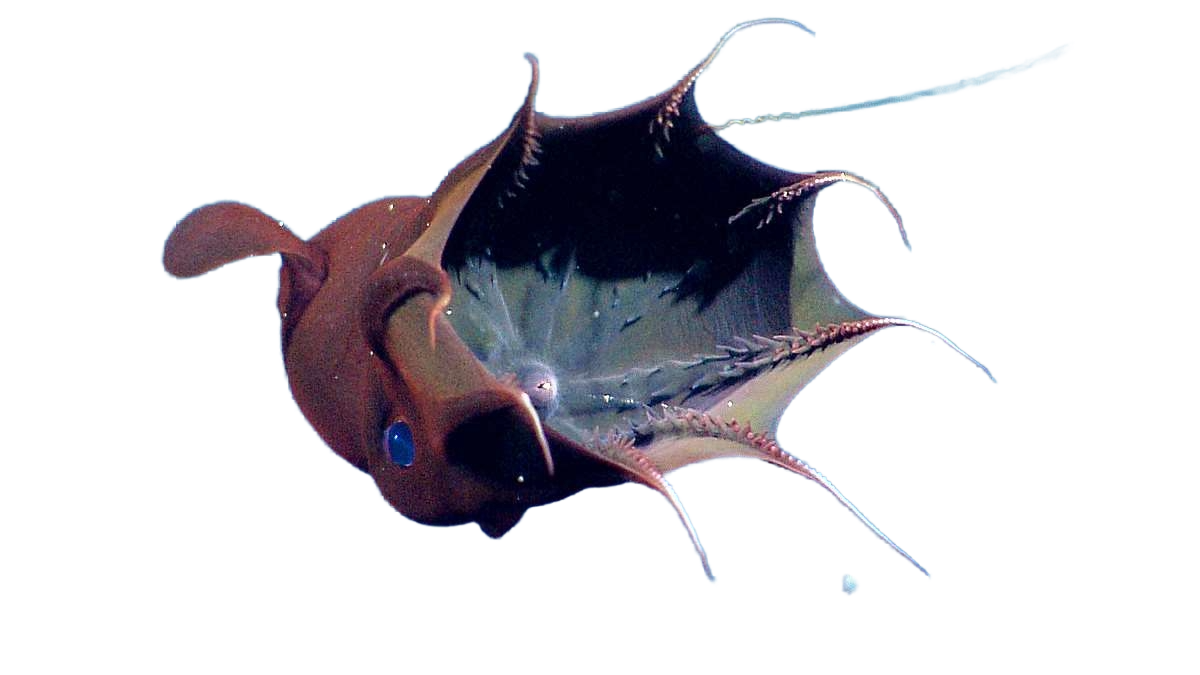
Vampire Squid
Not a squid, not a vampire. Turns itself inside-out defensively and produces glowing mucus clouds. Drama icon.
etymology: (Vampyroteuthis infernalis)
identification: The vampire squid has a small, rounded body about 30 cm (1 foot) wide, with dark, reddish-black skin and a cloak-like web connecting its eight arms. It has large, glowing blue eyes, tiny fins on top of its head for swimming, and bioluminescent organs along its arms and body.
location: The vampire squid is found in deep oceans worldwide, typically in temperate and tropical waters. It inhabits the oxygen minimum zone at depths of 600–900 meters (2,000–3,000 feet), where the water is cold, dark, and low in oxygen.
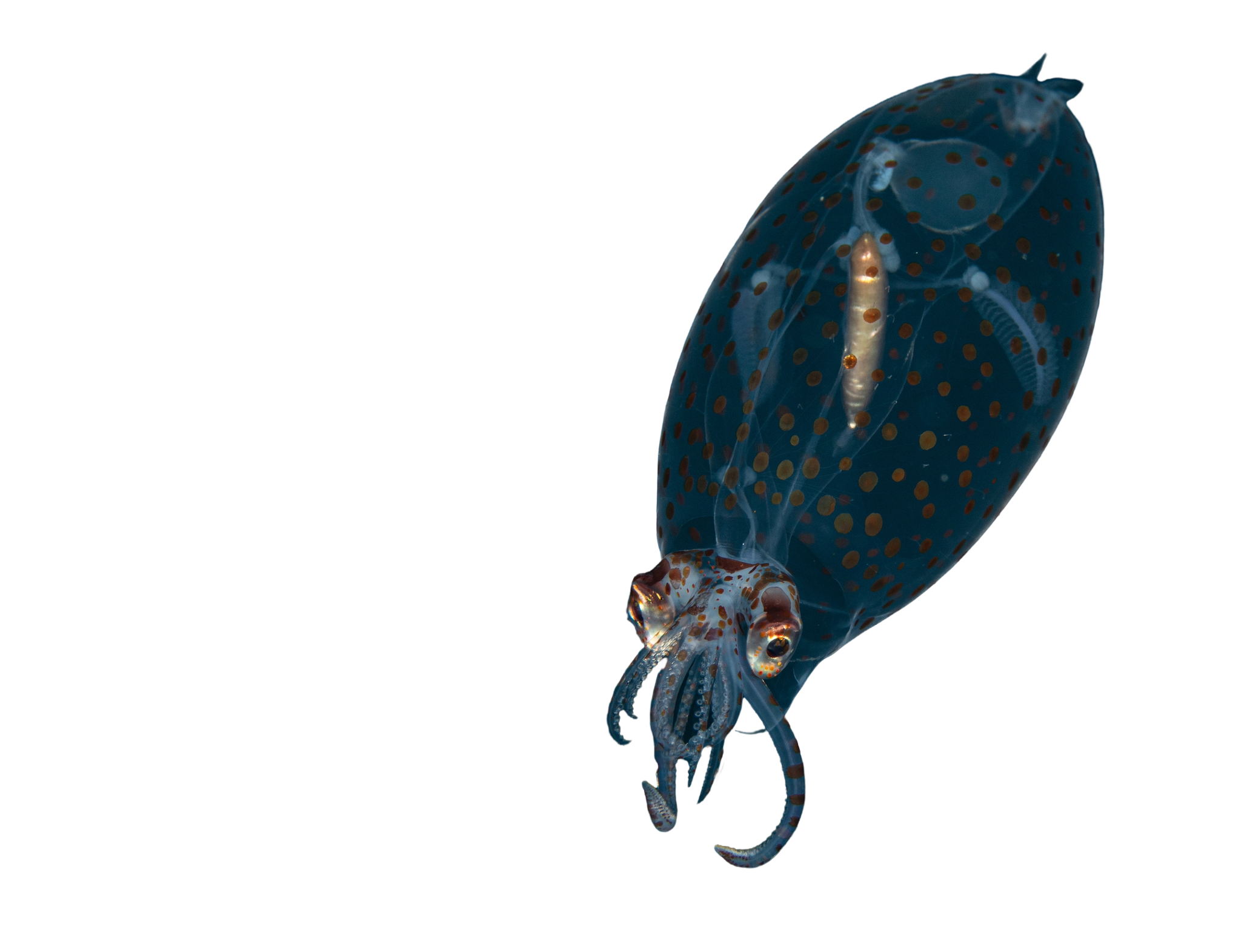
Glass Squid
Nearly invisible except for its eyes. A ghost with organs.
etymology: ...
identification: The glass squid has a slender, almost transparent body, allowing it to blend into the deep ocean. It has long, delicate arms and tentacles, small fins for swimming, and often tiny bioluminescent organs along its body for camouflage and signaling.
location: Glass squids are found in deep oceans worldwide, mostly in temperate and tropical waters. They typically inhabit the mesopelagic zone, at depths of 200–1,000 meters (650–3,300 feet), where their transparency helps them avoid predators in low-light conditions.
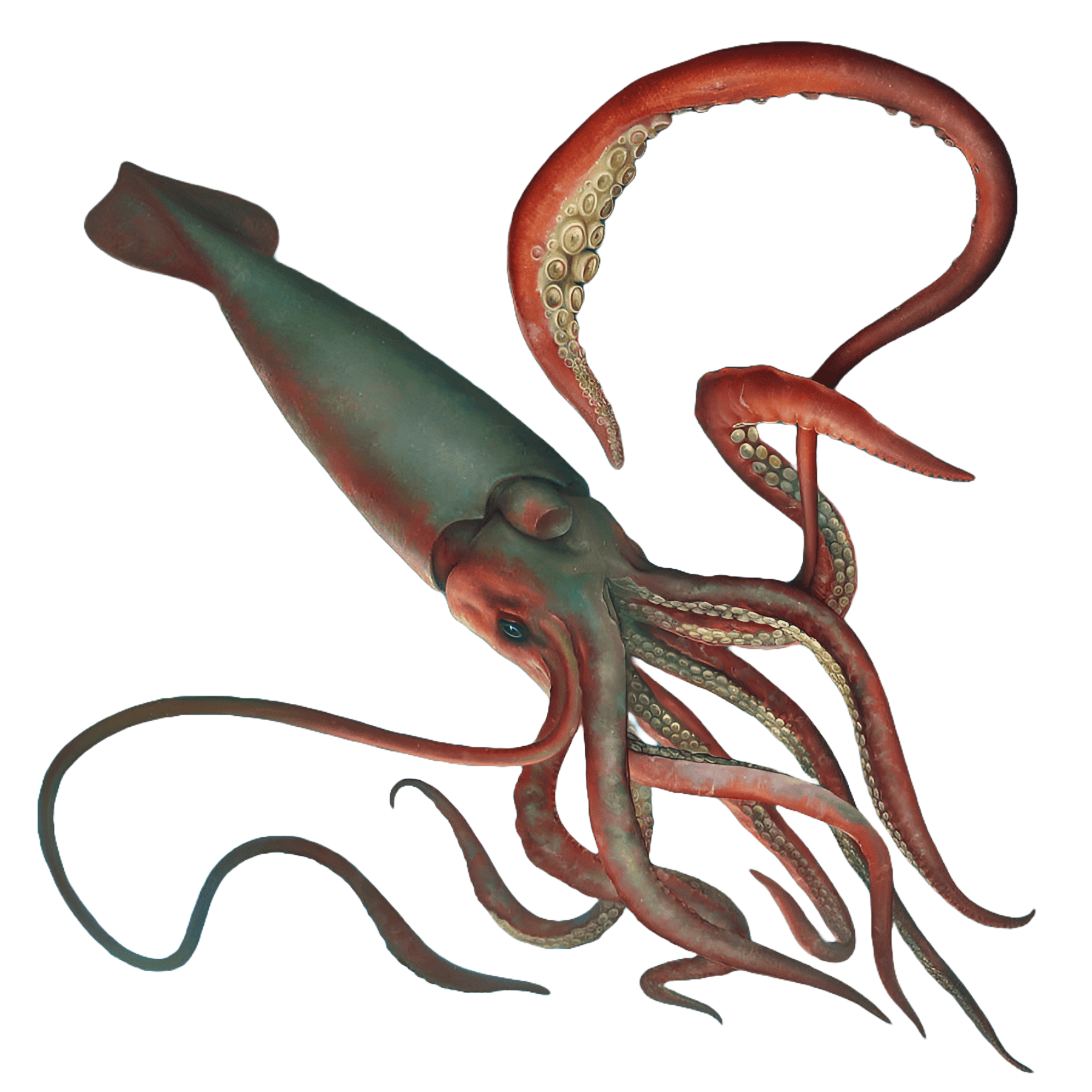
Giant Squid
The Kraken’s quiet cousin. Elusive, intelligent, massive eyes built for abyssal starlight. Only recently filmed alive. It spent centuries as a rumor because it preferred it that way.
etymology: (Architeuthis dux)
identification: The giant squid has a massive, elongated body with eight arms and two long feeding tentacles lined with suction cups and hooks. Its large eyes, some of the biggest in the animal kingdom, dominate its head, and its reddish or pinkish skin helps it blend into deep, dark waters.
location: The giant squid is found in deep oceans worldwide, mostly in temperate and subtropical waters. It typically inhabits depths of 300–1,000 meters (1,000–3,300 feet) along continental slopes and abyssal plains, making it rarely seen by humans.
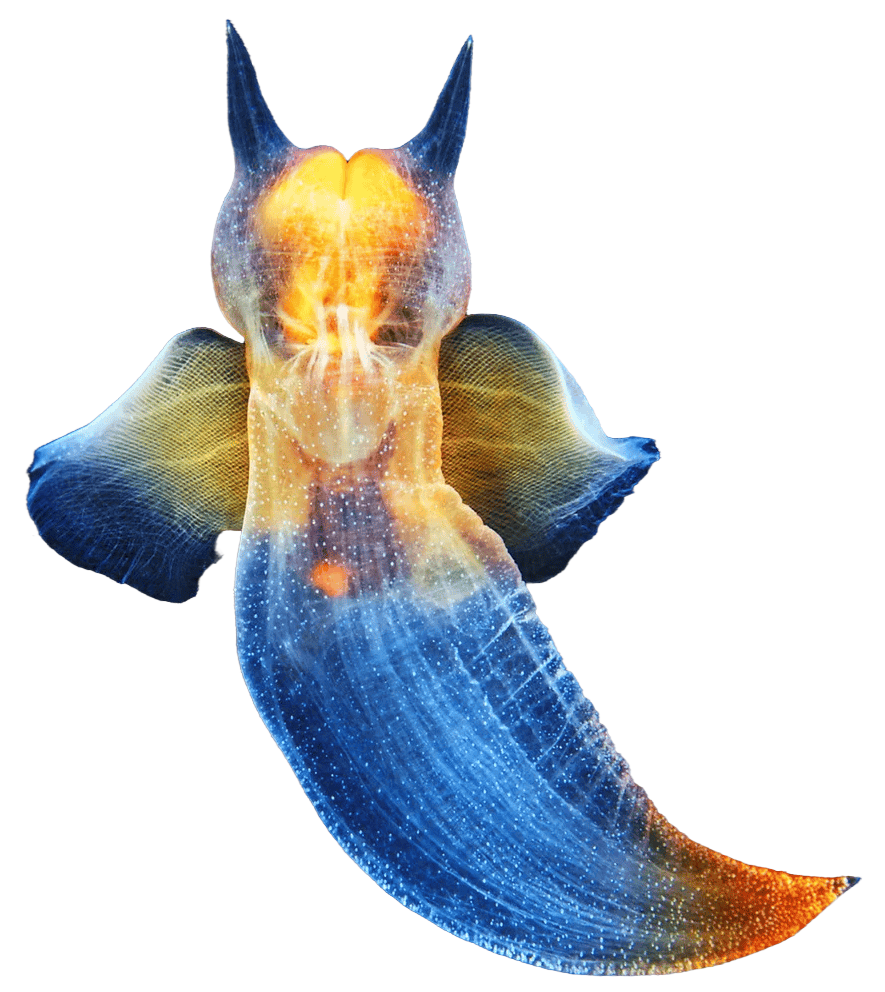 Sea Angels
Tiny, translucent “winged” snails that look angelic… until they unfold predatory tentacles and go full horror movie.
etymology: ...
identification: Sea angels are small, translucent sea slugs with wing-like flaps (parapodia) that let them “fly” gracefully through the water. They have elongated, gelatinous bodies, a tiny head with grasping tentacles for feeding, and often a glimmering or slightly colored appearance in the deep sea.
location: Sea angels are found in cold and temperate oceans worldwide, especially in polar and subpolar waters. They typically inhabit the open ocean’s upper to mid-water column, drifting and swimming at surface to several hundred meters deep depending on the species.
Arthropods
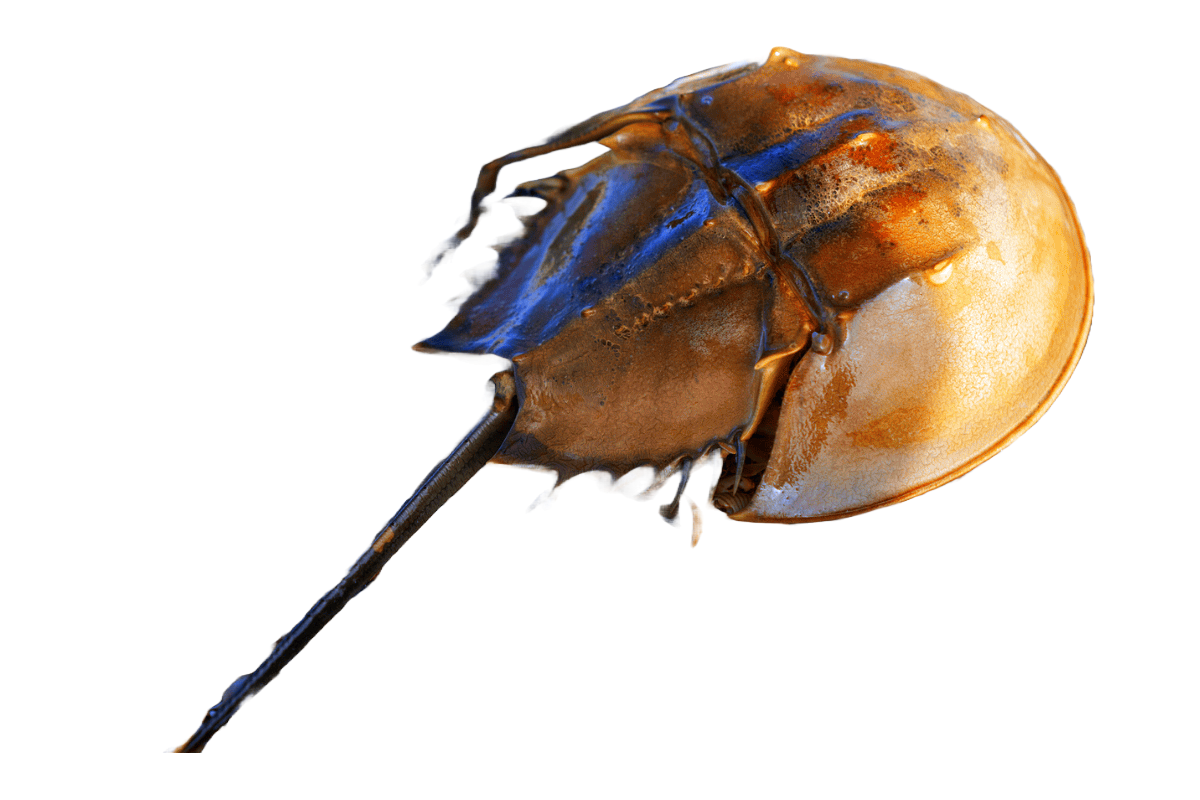
Horseshoe Crab
A relic creature. Blue blood. Ritual spawning under moonlight. Used in medicine like alchemy. It has outlived nearly everything that once worshipped it.
etymology: ...
identification: The horseshoe crab has a hard, dome-shaped exoskeleton with a spade-like tail spine (telson), compound eyes, and five pairs of jointed legs beneath its body. Its brownish, armored shell protects a soft, segmented body underneath, giving it a prehistoric, almost armored appearance.
location: Horseshoe crabs are found in shallow coastal waters along the Atlantic and Gulf coasts of North America and parts of Southeast Asia. They typically inhabit mudflats, sandy beaches, and estuaries, where they come ashore to spawn during high tides.
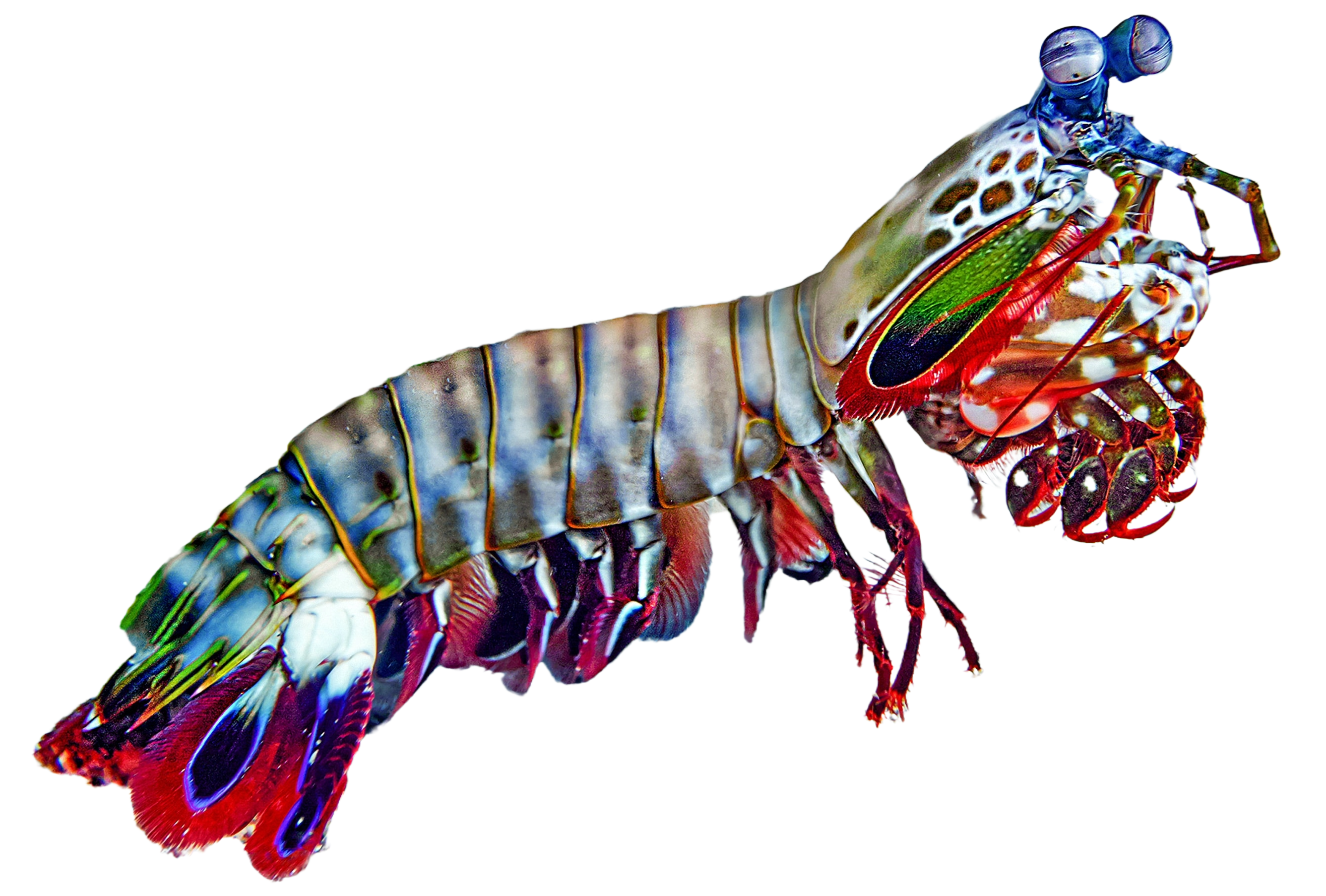
Mantis Shrimp
A chromatic warrior god. Sees colors humans can’t, punches with cavitation shockwaves. A sea deity accidentally left in a tidepool.
etymology: ...
identification: The mantis shrimp has a sturdy, elongated body covered in a hard, colorful exoskeleton, with large, specialized eyes on stalks and powerful raptorial claws used to strike or spear prey. Its vibrant colors range from greens and blues to reds and oranges, making it one of the ocean’s most visually striking predators.
location: Mantis shrimp are found in tropical and subtropical oceans worldwide, primarily in the Indo-Pacific region. They typically inhabit shallow coastal waters, living in burrows or crevices in coral reefs, sandy bottoms, and seagrass beds.
Cnidarian
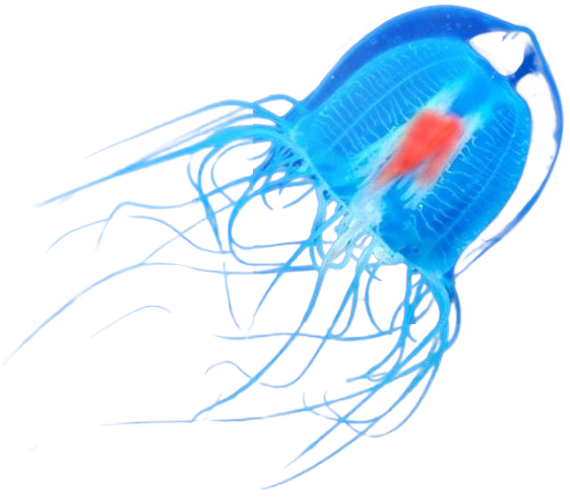
Immortal Jellyfish
etymology: (Turritopsis dohrnii)
identification: The immortal jellyfish has a small, translucent, bell-shaped body about 4–5 mm wide with delicate, trailing tentacles. Its nearly invisible form allows it to drift gracefully in the water, and it can revert its cells to a juvenile state, giving it its “immortal” reputation.
location: The immortal jellyfish (Turritopsis dohrnii) is found in warm, temperate, and tropical oceans worldwide, including the Mediterranean Sea, Atlantic Ocean, and Pacific Ocean. It typically drifts in the open water near the surface, often among plankton-rich areas.
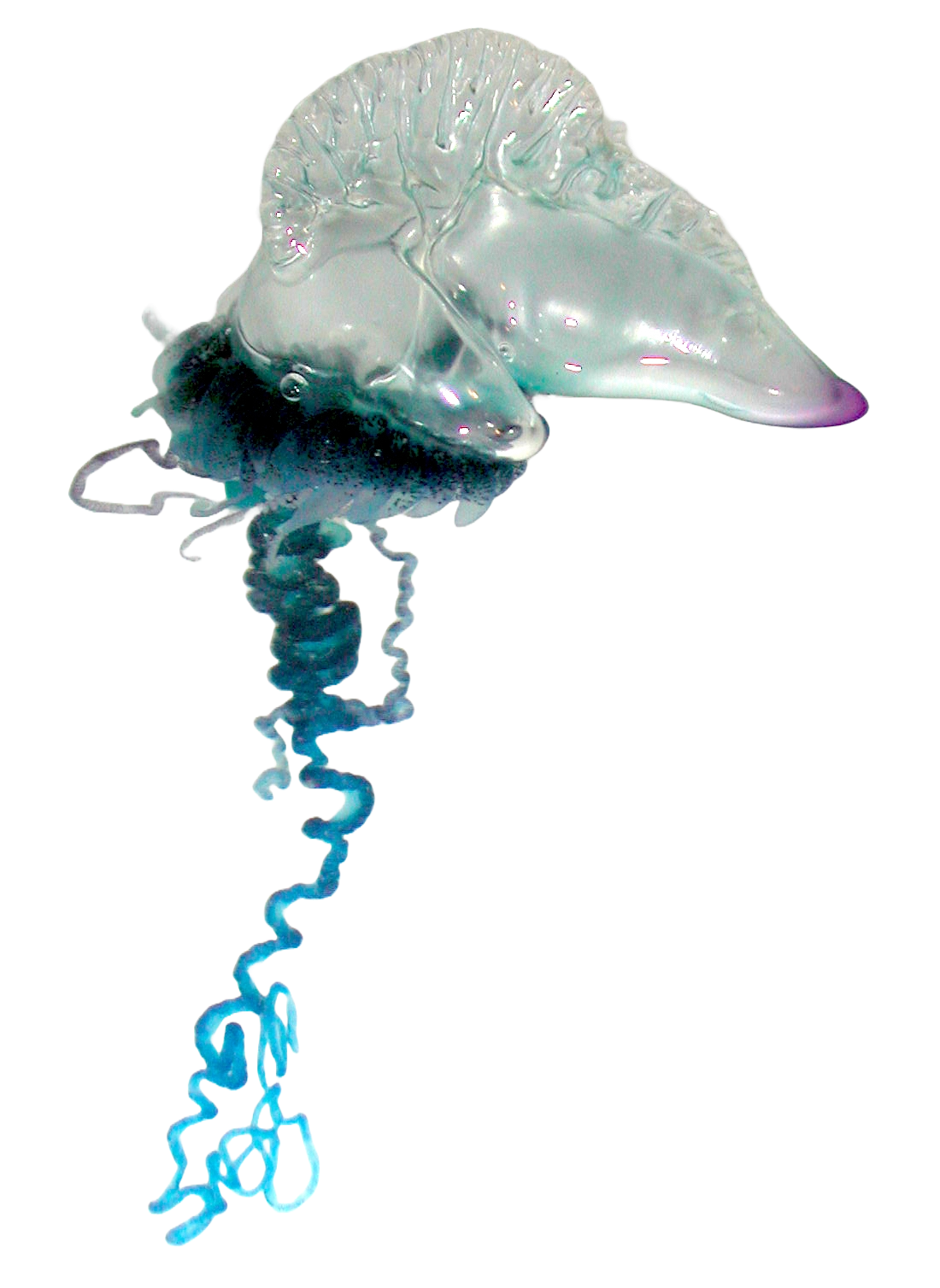
Portuguese man-of-war
etymology: ...
identification: The Portuguese man o’ war has a gas-filled, translucent blue or purple float that sits above the water like a sail, and long, trailing tentacles that can extend tens of meters. Its body is soft and colonial, made up of specialized polyps working together to capture prey.
location: The Portuguese man o’ war is found in warm ocean waters worldwide, especially in the Atlantic, Indian, and Pacific Oceans. It typically drifts on the surface of open seas and coastal waters, carried by winds and currents, rather than swimming on its own.
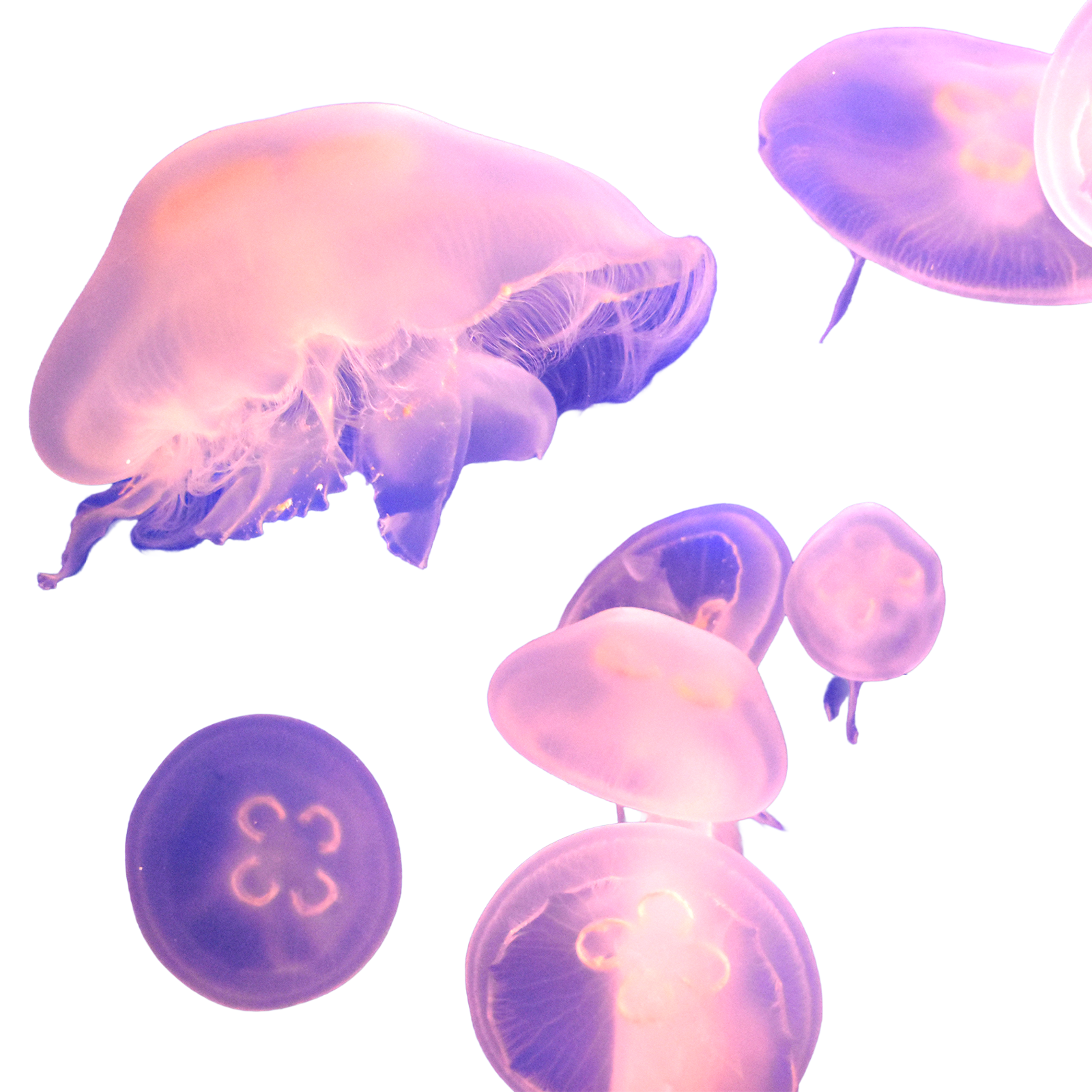 Moon Jellyfish
etymology: (Aurelia aurita)se
identification: The moon jellyfish has a soft, translucent, saucer-shaped bell up to 40 cm (16 in) wide, with short, delicate tentacles around the edge and four horseshoe-shaped gonads visible in the center. Its gentle, pale appearance allows it to float gracefully through the water.
location: The moon jellyfish is found in coastal and open waters worldwide, especially in temperate and tropical seas. They typically drift near the surface of bays, harbors, and shallow coastal areas, often forming large blooms.
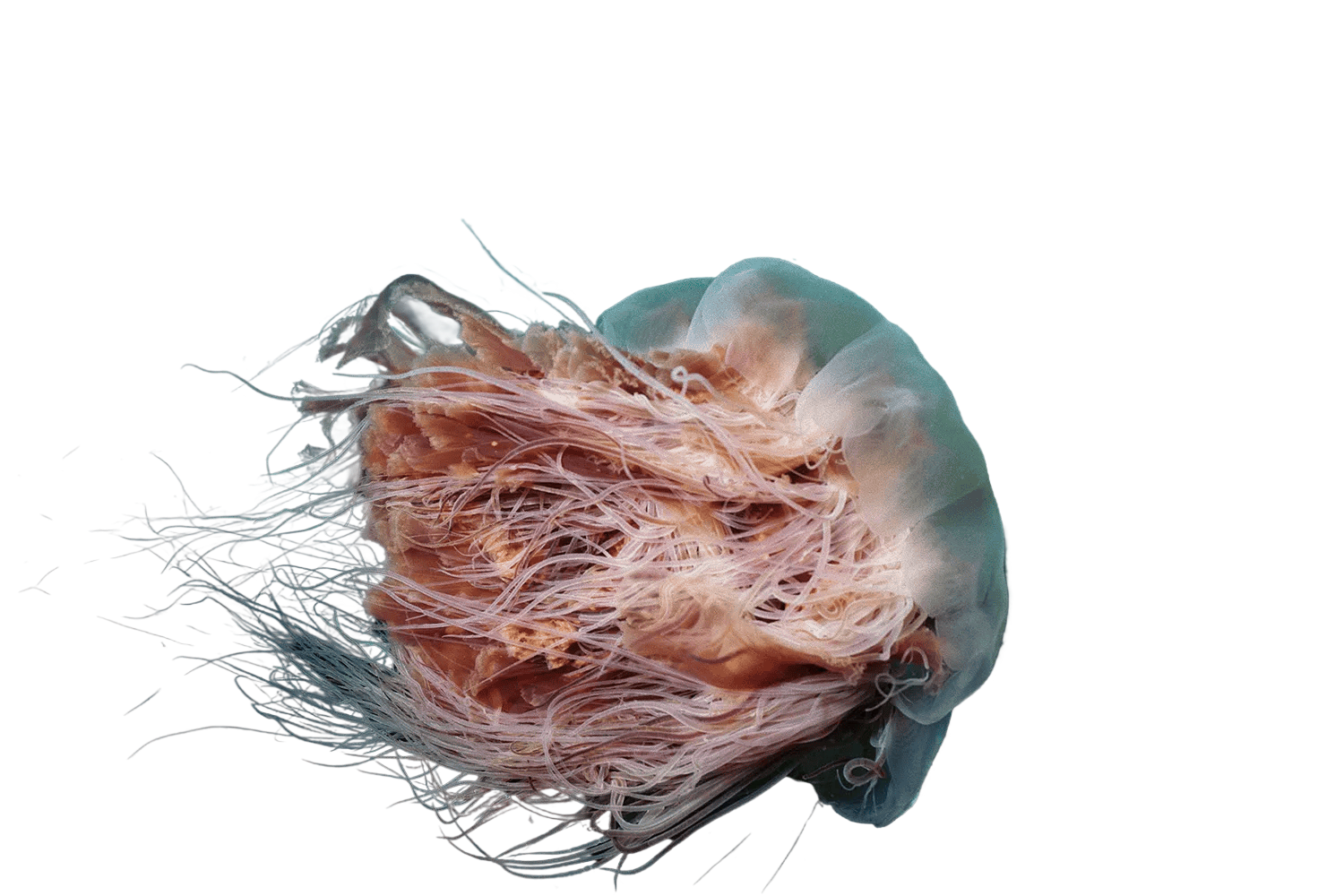
Lion's Mane Jellyfish
etymology: (Cyanea capillata)
identification: The lion’s mane jellyfish has a large, bell-shaped body that can reach over 2 meters (6.5 feet) wide, with long, flowing tentacles that trail up to 30 meters (100 feet). Its reddish-orange to pinkish coloration and cascading tentacles give it a mane-like, striking appearance in the water.
location: The lion’s mane jellyfish is found in cold, northern oceans, especially the Arctic, North Atlantic, and North Pacific. They typically drift in coastal and open waters, often near the surface in cooler temperate to subarctic regions.