"In The Beginning We Were All Created Female" Monica Sjoo
"In the beginning . . . was a very female sea. For two-and-a-half billion years on earth, all life-forms floated in the womb-like environment of the planetary ocean-nourished and protected by its fluid chemicals, rocked by the lunar-tidal rhythms. Charles Darwin believed the menstrual cycle originated here, organically echoing the moon-pulse of the sea. And, because this longest period of life's time on earth was dominated by marine forms reproducing parthenogenetically, he concluded that the female principle was primordial. In the beginning, life did not gestate within the body of any creature, but within the ocean womb containing all organic life. There were no specialized sex organs; rather, a generalized female existence reproduced itself within the female body of the sea."
Before more complex life forms could develop and move onto land, it was necessary to miniaturize the oceanic environment, to reproduce it on a small and mobile scale. Soft, moist eggs deposited on dry ground and exposed to air would die; life could not move beyond the water-hugging amphibian stage. In the course of evolution, the ocean - the protective and nourishing space, the amniotic fluids, even the lunar-tidal rhythm - was transferred into the individual female body. And the penis, a mechanical device for land reproduction, evolved.
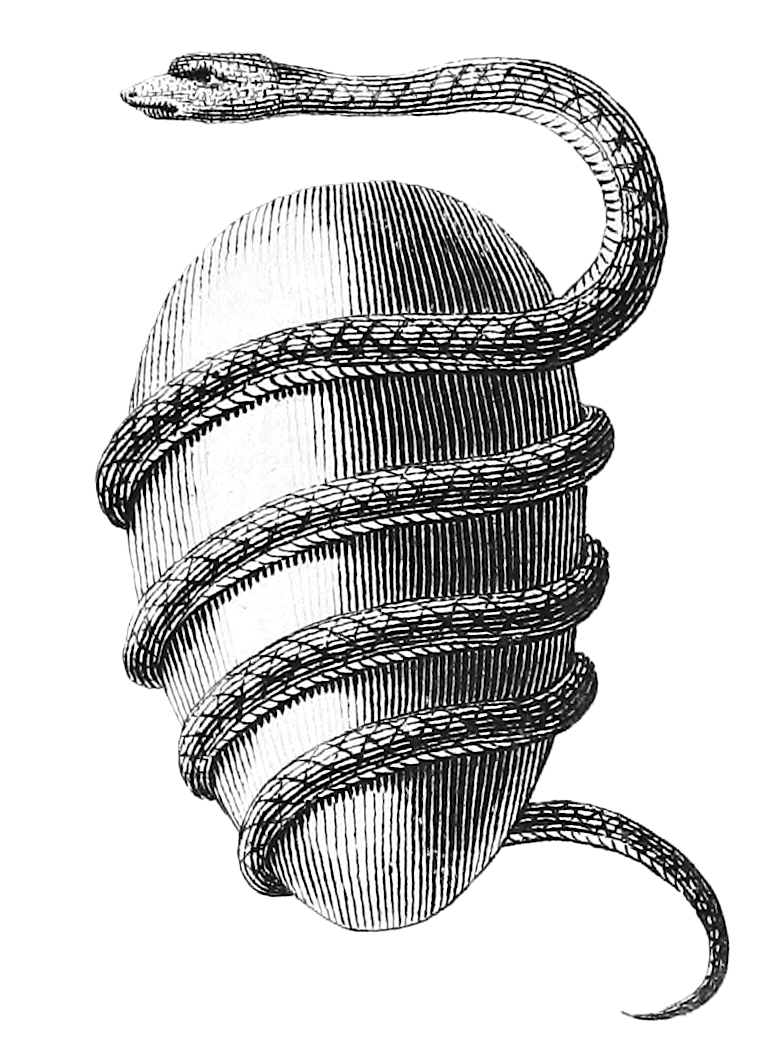
The penis first appeared in the Age of Reptiles, about 200 million years ago. Our archetypal association of the snake with the phallus contains, no doubt, this genetic memory.
This is a fundamental and recurring pattern in nature: life is a female environment in which the male appears, often periodically, and created by the female, to perform highly specialized tasks related to species reproduction and a more complex evolution, a freshwater crustacean, reproduces several generations of females by parthenogenesis; the egg and its own polar body mate to form a complete set of genes for a female offspring. Once annually, at the end of the year's cycle, a short-lived male group is produced; the males specialize in manufacturing leathery egg cases able to survive the winter. Among honeybees the drone group is produced and regulated by the sterile daughter workers and the fertile queen. Drones exist to mate with the queen. An average of seven drones per hive accomplish this act each season, and then the entire male group is destroyed by the workers. Among whiptail lizards in the American South-west, four species are parthenogenetic; males are unknown among the desert grassland, plateau, and Chihuahua whiptails, and have been found only rarely among the checkered whiptails.
Among mammals, even among humans, parthenogenesis is not technically impossible. Every female egg contains a polar body with a complete set of chromosomes; the polar body and the egg, if united, could form a daughter embryo. In fact, ovarian cysts are unfertilized eggs that have joined with their polar bodies, been implanted in the ovarian wall, and started to develop there.
This is not to say that males are an unnecessary sex. Parthenogenesis is a cloning process. Sexual reproduction, which enhances the variety and health of the gene pool, is necessary for the kind of complex evolution that has produced the human species. The point being made here is simply that, when it comes to the two sexes, one of us has been around a lot longer than the other.
In The Nature and Evolution of Female Sexuality, Mary Jane Sherfey, M.D., described her discovery in 1961 of something called the inductor theory. The inductor theory stated that "All mammalian embryos, male and female, are anatomically female during the early stages of fetal life." Sherfey wondered why this theory had been buried in the medical literature since 1951, completely ignored by the profession. The men who made this herstory-making discovery simply didn't want it to be true.
Sherfey pioneered the discussion of the inductor theory; and now, with modifications based on further data, its findings are accepted as facts of mammalian - including human - development. As Stephen Jay Gould describes it, the embryo in its first eight weeks is an "indifferent" creature, with bisexual potential. In the eighth week, if a Y-chromosome-bearing sperm fuses with the egg, the gonads will develop into testes, which secrete androgen, which in turn induces male genitalia to develop. In the absence of androgen, the embryo develops into a female. There is a difference in the development of the internal and external genitalia, however. For the internal genitalia - the fallopian tubes and ovaries, or the sperm-carrying ducts - "the early embryo contains precursors of both sexes." In the presence or absence of androgen, as one set develops the other degenerates. With the external genitalia, "the different organs of male and female develop along diverging lines from the same precursor." This means, in effect, that the clitoris and the penis are the same organ, formed from the same tissue. The labia majora and the scrotum are one, indistinguishable in the early embryonic stages; in the presence of androgen "The two lips simply grow longer, fold over and fuse along the midline, forming the scrotal sac."
Gould concludes: "The female course of development is, in a sense, biologically intrinsic to all mammals. It is the pattern that unfolds in the absence of any hormonal influence. The male route is a modification induced by secretion of androgens from the developing testes."
The vulnerability of the male newcomer within the female environment is well known. Vaginal secretions are more destructive to the Y-bearing sperm. The mortality rate is higher among neonate and infant males. Within the womb the male fetus, for the first two months, is protected by being virtually indistinguishable from a female. After that, it must produce large amounts of the masculinizing hormone in order to define itself as male, to achieve and to maintain its sexual identity. For all we know the Near Eastern myths upon which our Western mythologies are built, those which portray the young god or hero battling against a female dragon, have some analog here, in utero, where the male fetus wages a kind of chemical war against rebecoming female.
For now, it is enough to say that "maleness" among mammals is not a primary state, but differentiates from the original female biochemistry and anatomy. The original libido of warm-blooded animals is female, and the male - or maleness - is a derivation from this primary female pattern. Why, then, did the medical men, the scientists, take longer to figure out this basic biological fact than it took them to split the atom? And why, once this fact was noted, did they turn around and bury it in professional silence for ten years, until a woman dug it up again? Why indeed.
For about two thousand years of Western history, female sexuality was denied; when it could not be denied it was condemned as evil. The female was seen as divinely designed to be a passive vessel, serving reproductive purposes only. In one not-too-ancient dictionary, "clitoris" was defined as a "rudimentary organ," while "masculinity" equalled "the Cosmic generative force" . . . ! With Freud, female sexuality was not so much "rediscovered" as pathologized. Freud dismissed the clitoris as an undeveloped masculine organ and defined original libido as male. Clitoral eroticism was reduced to a perverse neurosis. Even after Masters's and Johnson's laboratory studies were published in Human Sexual Response in 1966, their findings were not integrated into psychoanalytical theory. In Mary Jane Sherfey's research during that period, she found not one work of comparative anatomy that described - or even mentioned - the deeper-lying clitoral structures; yet every other structure of the human body was described in living detail. Even today, with our relative sophistication of 1987, we are frequently whistled at by magazine headlines that promise breathless articles announcing the discovery of a new "spot" - a G-spot, an X-spot - located within the vagina. Within all these new "spots" exists the old wistful desire to deny the existence of the clitoris as a trigger-organ of female orgasm.
Why? There is the generalized, traditional fear of female sexuality. Further, there is discomfort with the similarity, with the common origin, of the female clitoris and the male penis. Women are used to hearing the clitoris described as an "undeveloped penis"; men are not used to thinking of the penis as an overdeveloped clitoris. Finally, and most seriously, there is a profound psychological and institutional reluctance to face the repercussions of the fact that the female clitoris is the only organ in the human body whose purpose is exclusively that of erotic stimulation and release. What does this mean? It means that for the human female, alone among all earth's life-forms, sexuality and reproduction are not inseparable. It is the male penis, carrier of both semen and sexual response, that is simultaneously procreative and erotic. If we wanted to reduce one of the sexes to a purely reproductive function, on the basis of its anatomy (we don't), it would be the male sex that qualified for such a reduction, not the female. Not the human female.
But these are only biological facts. These are only biological realities. As we know, facts and realities can be, and are, systematically ignored in the service of established ideologies.
Throughout the world today virtually all religious, cultural, economic, and political institutions stand, where they were built centuries ago, on the solid foundation of an erroneous concept. A concept that assumes the psychic passivity, the creative inferiority, and the sexual secondariness of women. This enshrined concept states that men exist to create the human world, while women exist to reproduce humans. Period. If we argue that data exists - not solely biological, but archaeological, mythological, anthropological, and historical data - which refutes the universality of this erroneous concept, we are told to shut up; because something called "God" supports the erroneous concept, and that's all that matters. That's the final word. Throughout the world, throughout what we know of history, something called "God" has been used to support the denial, the condemnation, and the mutilation of female sexuality. Of the female sex, ourselves. Today, in parts of Africa - predominantly among African Muslims, but also among African Christians and Jews, and some tribal beliefs - young girls are still subjected to clitoridectomy. This surgery, often performed by older women with broken glass or knives, excises the clitoris, severing the nerves of orgasm; the operation is intended to force the girl to concentrate on her vagina as a reproductive vessel. Infibulation, a more thorough operation, removes the labia minora and much of the labia majora; the girl is then closed up with thorns or required to lie with her legs tied together until her entire vaginal orifice is fused shut, with a straw inserted to allow passage of urine and menstrual blood. On the wedding night the young woman is slit open by a midwife or her husband; further cutting and reclosing is performed before and after childbirth. Complications from these surgeries are numerous, including death from infection, hemorrhage, inability to urinate, scar tissue preventing dilation during labor, painful coitus, and infertility due to chronic pelvic infection. In 1976 an estimated 10 million women were involved with this operation. And something called "God" justified it; a "God" who supposedly created young girls as filthy sex maniacs who must then be mutilated to turn them into docile breeders.
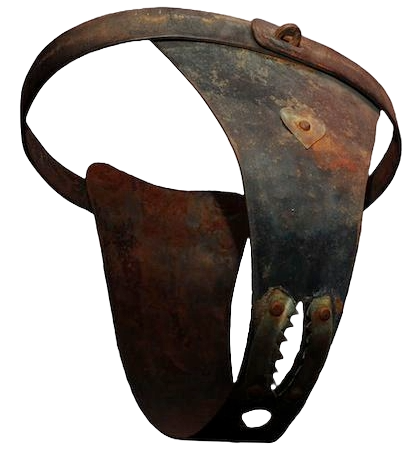
The word "infibulation" comes from the Latin fibula, meaning a "clasp." Those civilized Romans, great highway builders, also invented the technology of fastening metal clasps through the prepuces of young girls to enforce chastity. This practice was copied by Christian crusaders during the early Middle Ages in Europe; they locked up their wives and daughters in metal "chastity belts" and then took the keys with them while they were gone - often for many years - fighting for "God" in the Near East.
And, lest through hypocrisy and racism we dismiss these practices as merely "Barbaric" or "Ancient," we must recall that clitoridectomies were performed in the last century on young girls and women in both Europe and America. This surgery, very popular with nineteenth-century Victorians, was inflicted on any female considered to be "oversexed," or as a punishment for masturbation, or as a cure for "madness." These determinations were all made by male relatives, male physicians, and male clerics, and the women involved had no legal say in the matter.
These are extreme examples of the repression and mutilation of female sexuality, always sanctioned, however remotely and dishonestly, by something called "God." All the other repressions and mutilations - of the body, of the mind, of the soul, of our experienced female selves - are so well known and documented that they need no numeration at this point; we can all make our own lists. The point is this: Wherever repression of female sexuality, and of the female sex, exists - and, at the present writing, this is everywhere on earth - we find the same underlying assumptions. These are ontological assumptions - assumptions made at the very root of things - about the nature of life itself. They are (1) that the world was created by a male deity figure, or God; (2) that existing world orders, or cultures, were made by and for men, with God's sanction; (3) that females are an auxiliary sex, who exist to serve and populate these male world orders; (4) that autonomous female sexuality poses a wild and lethal threat to these world orders, and therefore must be controlled and repressed; and finally (5) that God's existence as a male sanctions this repression. The perfect circularity, or tautology, of these assumptions only helps to bind them more securely around the human psyche. That they are as erroneous as they are universal seems to pose no problem to their upholders. After all, wherever we go on earth, every intact institution - religious, legal, governmental, economic, military, communications, and customs - is built on the solid slab of these assumptions. And that's a pretty entrenched error.
In the post-World War II United States - as well as in Europe and most of the world generally - we've gone through a secularizing period in which some of these assumptions have been loosened up, and even been made to crumble, under questioning. But now the backlash is upon us. Today, spokespeople for various fundamentalist religious beliefs use modern media to broadcast a very old idea: that female sexuality - i.e., feminists, and feminist demands for abortion, contraception, reproductive autonomy, childcare, equal pay, psychological integrity - constitutes a threat to "our civilization"; and this amounts to a "Blasphemy against God." Whores of Babylon, Darwin's Theory of Evolution, and the "menace of world communism" all somehow get subliminally mixed up in this feminist threat - for some very good historic and psychological reasons - which we will explore later. For now, it is enough to say that "God" and "civilization" are loaded concepts (loaded with dynamite!) that can always be brought in to end an argument that cannot otherwise be refuted. Or, for those who don't lean too heavily on "God," or who major in "civilization," you can always quote an anthropologist!
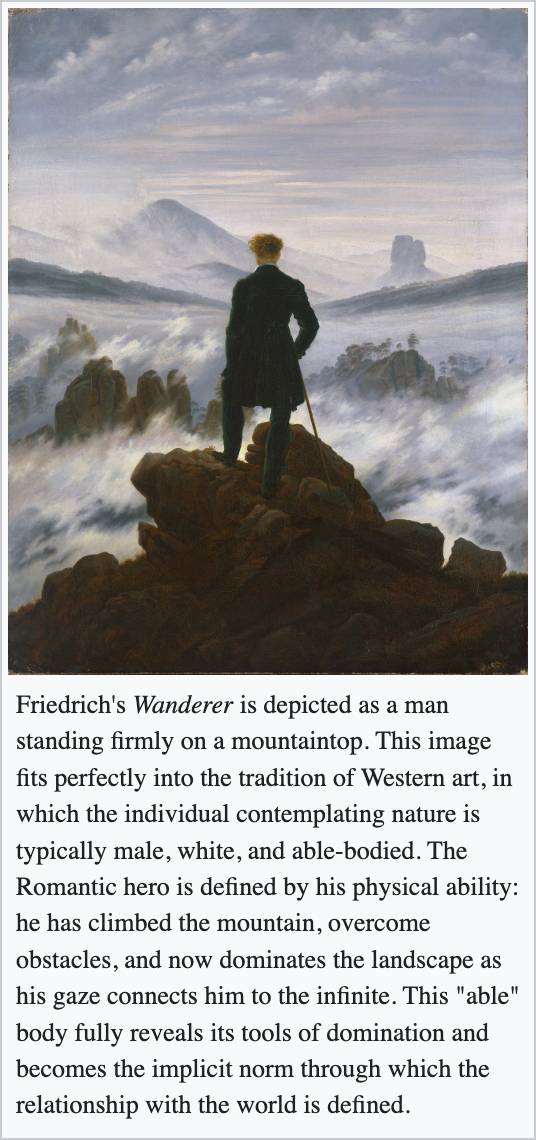
For, just as established religions assume the maleness of God, just as Freud and psychoanalysis assumed the maleness of libido, so have the social sciences - and in particular anthropology - assumed the generic maleness of human evolution. Both popular and academic anthropological writers have presented us with scenarios of human evolution that feature, almost exclusively, the adventures and inventions of man the hunter, man the toolmaker, man the territorial marker, and so forth. Woman is not comprehended as an evolutionary or evolutionizing creature. She is treated rather as an auxiliary to a male-dominated evolutionary process; she mothers him, she mates him, she cooks his dinner, she follows around after him picking up his loose rocks. He evolves, she follows; he evolutionizes, she adjusts. If the book jackets don't give us pictures of female Homo sapiens being dragged by the hair through 2 or 3 million years of he-man evolution, we are left to assume this was the situation.
This, despite the known fact that among contemporary and historic hunting-and-gathering people, as among our remote hunting-and-gathering ancestors, 75 percent to 80 percent of the group's subsistence comes from the women's food-gathering activities. This, despite the known fact that the oldest tools used by contemporary hunters and gatherers, and the oldest, most primal tools ever found in ancient sites, are women's digging sticks. This, despite worldwide legends that cite women as the first users and domesticators of fire. This, despite the known fact that women were the first potters, the first weavers, the first textile-dyers and hide-tanners, the first to gather and study medicinal plants - i.e., the first doctors - and on and on. Observing the linguistic interplay between mothers and infants, mothers and children, and among work-groups of women, it is easy to speculate on the female contribution to the origin and elaboration of language. That the first time measurements ever made, the first formal calendars, were women's lunar-markings on painted pebbles and carved sticks is also known. And it is thoroughly known that the only "God"-image ever painted on rock, carved in stone, or sculpted in clay, from the Upper Paleolithic to the Middle Neolithic - and that's roughly 30,000 years - was the image of a human female.
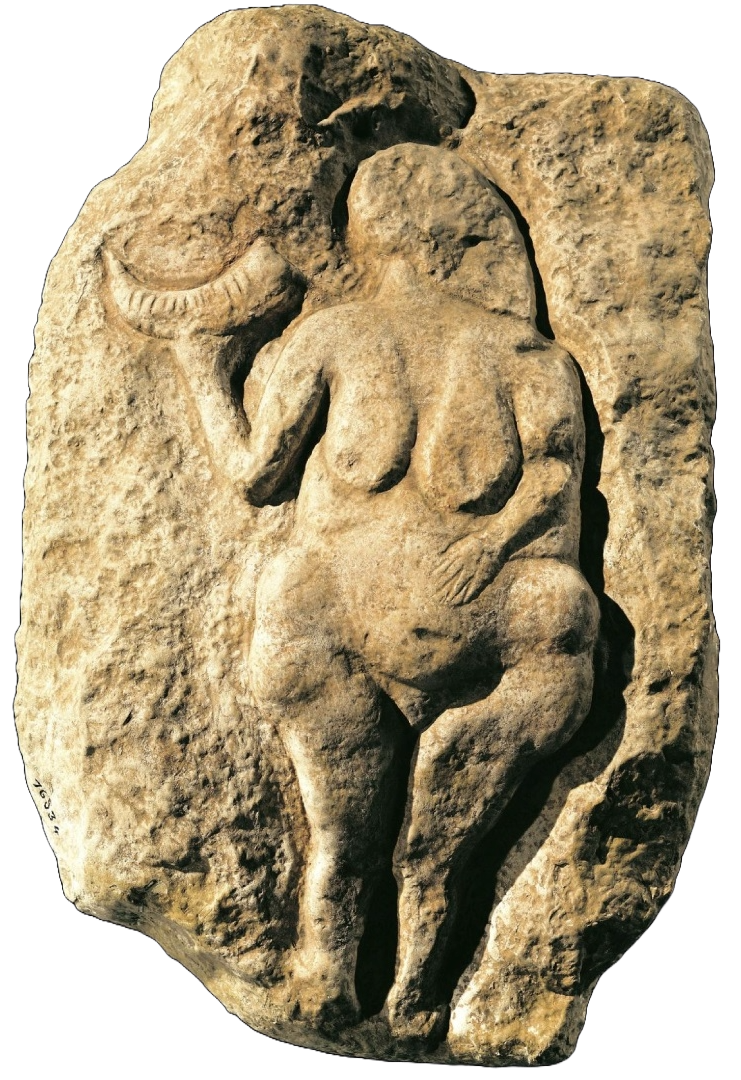
In 1948 The Gate of Horn was published in Britain; in 1963 it was published in America, retitled Religious Conceptions of the Stone Age. In this pioneering work, archaeologist and scholar G. Rachel Levy showed the unbroken continuity of religious images and ideas descending from the Cro-Magnon peoples of the Upper Paleolithic period in Ice Age Europe, through the Mesolithic and Neolithic developments in the Near East, and down to our own historical time. As Levy noted, these early people are lost to us in the mists of time; but their primal visions, images, and gestalts of human experience on this planet still resonate in our psyches, as well as in our historic religious-ontological symbols. These Early Stone Age people "bequeathed to all humanity a foundation of ideas upon which the mind could raise its structures." And what were these primal human images and ideas? The cave as the female womb; The Mother as a pregnant earth; the magical fertile female as The Mother of all animals; the Venus of Laussel standing with the horn of the moon upraised in her hand; the cave as the female tomb where life is buried, painted blood red, and awaiting rebirth. Levy shows the continuity of these images and symbols through the Late Neolithic Near Eastern rites and mythologies, and their endurance 30,000 years later in "modern" religions. In Christianity, for example, with its central image of the birth of the sacred child, in a cave-like shelter, surrounded by magic animals; and, especially in Catholicism, the icon of the great mother who stands on the horned moon and awaits the rebirth of the world.
The evidence leaves no doubt that these images were at the origins of what we call human psychological and spiritual expression. Levy's book is a masterpiece; it received great praise upon both its British and American publications; and has since been virtually bypassed and ignored by the anthropological-archaeological-academic establishments. Why? Because her evidence is irrefutable. It shows with clarity - and in the solidity of stone and bone - that the first 30,000 years of Homo sapiens' existence was dominated by a celebration of the female processes: of the mysteries of menstruation, pregnancy, and childbirth; of the analogous abundance of the earth; of the seasonal movement of animals and the cycles of time in the Great Round of The Mother. The Gate of Horn is as close as we can come to reading the "sacred book" of our early human ancestors. And it confirms what too many people do not want to know: that the first "God" was female.
Since Levy wrote, the tendency has been to relegate these Old Stone Age and Neolithic images to the psychological realm - they've become "Archetypes of the unconscious" and so forth, while anthropological writers proper, both academic and popular, continue to explain physical, real human development solely in terms of the experiences of the male body in hunting, aggression, and toolmaking. Thus the female images - which are there, and cannot be denied - are sideswiped, reduced to "The subjective," "The mythic realms"; and thus the first 30,000 years of our human history is denied to us, relegated to a "mind trip" or "psychological software." Even among feminists, in recent years, there has arisen doubt that these images and symbols might be anything but "mythology"— i.e., unrealities.
To approach our human past - and the female God - we need a wagon with at least two wheels: one is the mythical-historical-archaeological; the other is the biological-anthropological. A strong track has already been laid down for the mythical-historical-archaeological wheel; milestones along that track, along with G. Rachel Levy's great work, are J. J. Bachofen's Myth, Religion and Mother-Right, Robert Briffault's The Mothers, Helen Diner's Mothers and Amazons, Jessie Weston's From Ritual to Romance, Robert Graves's The White Goddess, O. G. S. Crawford's The Eye Goddess, Sibylle von Cles-Reden's In the Realm of the Great Goddess, Michael Dames's Silbury Treasure and Avebury Cycle, Marija Gimbutas's The Goddesses and Gods of Old Europe; and most recently Elizabeth G. Davis's The First Sex; Merlin Stone's When God Was a Woman and Ancient Mirrors of Womanhood; Phyllis Chesler's Women and Madness and About Men; Adrienne Rich's Of Woman Born; Mary Daly's Beyond God the Father, Gyn-Ecology, and Pure Lust; Susan Griffin's Woman and Nature; Anne Cameron's Daughters of Copper Woman—and many many more, including the richly useful Women's Encyclopedia of Myths and Secrets by Barbara G. Walker.
The other side of our wagon - the biological-anthropological side - has almost no wheel and no track; not because there is no important place to go in that direction, but because the physical-cultural anthropologists are off somewhere else, busily mapping the evolution of Tarzan. There is no body of anthropological work based on the evolution of female biology. With rare exceptions, there have been no attempts whatsoever to study the evolution of human physiology and cultural organization - from pre-hominid to "modern man" - from the perspective of the definitive changes undergone by the female in the process of that evolution. Popular books on this subject, by Lionel Tiger, Desmond Morris, et al., are invariably male-oriented, treating the evolution of the female as sex object only, from monkey-in-heat to hot bunny. One delightful exception is Elaine Morgan's The Descent of Woman; during 12 million years of dry Pliocene, Morgan speculates, the female prehominid took to the oceans, surviving in the warm and food-filled coastal waters and during this experience underwent a sea-change from knuckle-walking, rear-sex primate to upright human sexual body, to which the male primate responded by becoming man. Morgan argues convincingly that the human species survived the long Pliocene drought through the cooperation and social invention of the evolving hominid females in their adaptation to the sea; academic "experts" ignore this theory, but they have no other explanation for our Pliocene survival, for our successful evolution from ape to human during this difficult period, or for the many ways in which our human bodies resemble the bodies of sea mammals, rather than primates.
In The Time Falling Bodies Take to Light, historian William Irwin Thompson points out that early human evolution occurred in three critical stages: (1) hominization, in which our primate bodies became human, not only in walking upright and freeing the hands, but specifically in our sexual characteristics and functions; (2) symbolization, in which we began using speech, marking time, painting and sculpting images; and (3) agriculturalization, in which we domesticated seeds and began control of food production. And, as Thompson writes, all three stages were initiated and developed by the human female. The symbol-making and agricultural stages have been studied, and the originating role of women in these stages is known; it is sexual hominization which, as yet, has barely been explored.
Why? Why indeed. Because sexual hominization is almost exclusively the story of the human female. The mechanics and anatomy of male sexuality, after all, haven't changed greatly since the primates made love. The revolution in human sexuality - the revolution that made us human - resulted from evolutionary changes that occurred in the female body. These changes were not primarily related to mammalian reproduction, but to human sexual relationship. No one knows the order in which they occurred, but taken together, as an evolved cluster of sexual characteristics, they constitute a truly radical sexual metamorphosis undergone by the human female:
Elimination of the estrus cycle, and development of the menstrual cycle, meant that women were not periodically in heat, but capable of sexual activity at any time. Pregnancy could occur during a part of the cycle; but for most of the cycle sex could happen without necessarily resulting in pregnancy. Among all other animals, the estrus cycle determines that copulation always results in pregnancy, and has no other than a reproductive purpose.
Development of the clitoris and evolution of the vagina meant a greatly enhanced sexuality and orgasmic potential in human females compared to all other animals.
The change from rear to frontal sex, we can imagine, created an enormous change in relations between the sexes; frontal sex means a prolonged and enhanced lovemaking period, and what might be called the personalization of sex. The emotion-evoking role of face-to-face intercourse in the development of human self-consciousness has yet to be evaluated (she turned around and looked him in the eye: and there was light!)
Development of breasts added to woman's potential for sexual arousal; further, combined with frontal sex, no doubt the female's maternal and social feelings were also now aroused by the personal lover, whose body was now analogous to the infant's body at her breast.
As Thompson points out, such radical changes in the female body alone were enough to trigger the hominization of the species. Human beings, with these changes, became the only creatures on earth for whom copulation occurs - can occur, anytime - for nonreproductive purposes. Human sex thus became a multipurpose activity. It can happen for emotional bonding, for social bonding, for pleasure, for communication, for shelter and comfort, for personal release, for escape - as well as for reproduction of the species. And this is one of the original and major, determining differences between humans and all other animals, birds, reptiles, insects, fishes, worms . . . for whom copulation exists only and solely for species reproduction.
The human race has been definitively shaped by the evolution/ revolution of the female body into a capacity for nonreproductive sex.
This is not just a physical fact. It is a cultural, religious, and political fact of primary significance.
Many feminists today are unsure whether studies of evolutionary biology, or of religious mythology, can have political relevance for contemporary women. We believe that nothing could be more politically relevant than knowing why we got where we are now, by seeing how we got here, and where we began.
In the beginning, the first environment for all new life was female: the physical/ emotional/ spiritual body of The Mother, and the communal body of women - young girls, grown women, older women working together. When hunting-and-gathering people move, the infant is carried bound close to The Mother's body; when they settle, the women form an "Inner circle" campsite of women and children. The socialization process begins here.
Human culture is marked by a strengthening and prolongation of the relation between mothers and offspring. For its first year the human child is virtually an "embryo" outside the womb, extremely vulnerable and totally dependent. female group behavior - the cooperative care-sharing among mothers and children, older and younger women, in the tasks of daily life - emerges from the fact of this prolonged dependence of the human child on the human female for its survival. males help but they also leave; the male body comes and goes, but the female presence is constant. females train, discipline, and protect the young; beyond infant care, the maintenance and leadership of the entire kin-group is the task of women. The female animal is always on the alert, for on her rests the responsibility not only of feeding the young, but of keeping the young from being food for others. She is the giver and also the sustainer of beginning life. Among humans, males help with protection and food acquisition; but it is the communal group of females that surrounds the child, in its first four to six years of life, with a strong physical, emotional, traditional, and linguistic presence. And this is the foundation of social life and human culture.
The popular image of early human society as being dominated - indeed created - by sexist male hunters and ferocious territorial head-bangers just doesn't hold water. If the first humans had depended solely on despotic and aggressive male leaders, or on several males in chronic, ritualistic contention for power-human society would never have developed. Human culture could never have been invented. The human presence on earth would never have evolved.
The fact is that it was from this first inner circle of women - the campsite, the fire-site, the cave, the first hearth, the first circle of birth - that human society evolved. As hominids evolved into Paleolithic Homo sapiens, and then into settled and complex Neolithic village people on the time-edge of "civilization," these tens of thousands of years of human culture were shaped and sustained by communities of creative, sexually and psychically active women - women who were inventors, producers, scientists, physicians, lawgivers, visionary shamans, artists. Women who were also The Mothers - receivers and transmitters of terrestrial and cosmic energy.
We have to understand how and why these ancient millennia of womancultures have been buried - ignored, denied, passed off as "mythology" or "primitive prehistoric origins" - by Western male historians who insist (and often really believe) that "real history" began only about five thousand years ago with the relatively recent institutions of patriarchy.